- India’s EV market offers options from under ₹8 lakh (Tata Tiago EV) all the way up to ₹30+ lakh (Mahindra XEV 9S/9e).
- MG Windsor EV is the most popular all-rounder CUV, starting at just ~₹9.99 lakhs with premium comfort.
- Tata dominates the list with four models, including Nexon EV, Punch EV, Curvv EV, and Tiago EV, catering to every segment.
- Mahindra’s BE 6 and XEV 9S/9e are built on a brand-new dedicated EV platform, delivering the longest ranges in their class.
- The Maruti e Vitara marks Maruti Suzuki’s first electric SUV, backed by India’s widest service network.
- Kia Carens Clavis EV stands out as India’s best family electric MPV with three-row seating and up to 490 km range.
- Bonus pick: the Hyundai Creta Electric offers Level 2 ADAS, dual 10.25-inch screens, and up to 510 km certified range.
- Bonus pick: the Tata Harrier EV is India’s first mass-market AWD electric SUV with a jaw-dropping 627 km claimed range.
- DC fast charging capabilities now span across all segments. Most top models support 10–80% charge in under an hour.
- 2026 is the most practical year yet to go electric in India. You get better range, faster charging, and stronger service networks.
India’s electric vehicle revolution is happening right now, on every street, highway, and charging station across the country. In 2026, the Indian EV market has matured considerably, offering a diverse lineup of electric cars that span every budget, body style, and lifestyle requirement. Whether you’re a first-time buyer looking for an affordable city runabout or a family in need of a spacious, long-range electric MPV, there’s never been a better moment to make the switch.
Today’s EVs deliver better real-world range, faster charging times, more premium features, and lower running costs than ever before. In this guide, we break down the 10 best electric cars available in India in 2026 (plus two exciting bonus picks) covering everything from price and specifications to the features that make each one stand out.
The Top 10 Electric Cars in India 2026
1. MG WINDSOR EV
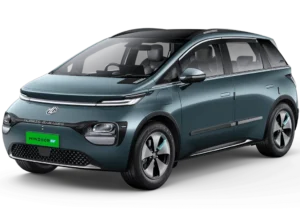
The MG Windsor EV has stormed India’s EV market with a winning combination of aggressive pricing, a spacious crossover-utility vehicle design, and a genuinely premium cabin experience. Its reclining rear seats, large panoramic roof, and 38 kWh / 52.9 kWh battery options give buyers unmatched versatility. The Windsor’s Battery-as-a-Service (BaaS) model also lowers the upfront cost significantly, making it an accessible entry point into electric mobility without sacrificing comfort or range. It’s no wonder this has become one of the best-selling EVs in the country.
| Specification | Details |
| Price (ex-showroom) | ~₹9.99 Lakhs onwards (BaaS) | ~₹17–18.5 Lakhs (standard) |
| Battery Options | 38 kWh | 52.9 kWh |
| Claimed Range | 332 km (38 kWh) | 449 km (52.9 kWh) |
| Motor & Power | Front-mounted, 134 bhp |
| Charging | AC home charging + DC fast charging support |
| Key Features | Reclining rear seats, panoramic sunroof, 12.3-inch infotainment, ADAS, wireless charging, ambient lighting |
| Body Type | CUV (Crossover Utility Vehicle) |
| Seating | 5 |
2. TATA NEXON EV
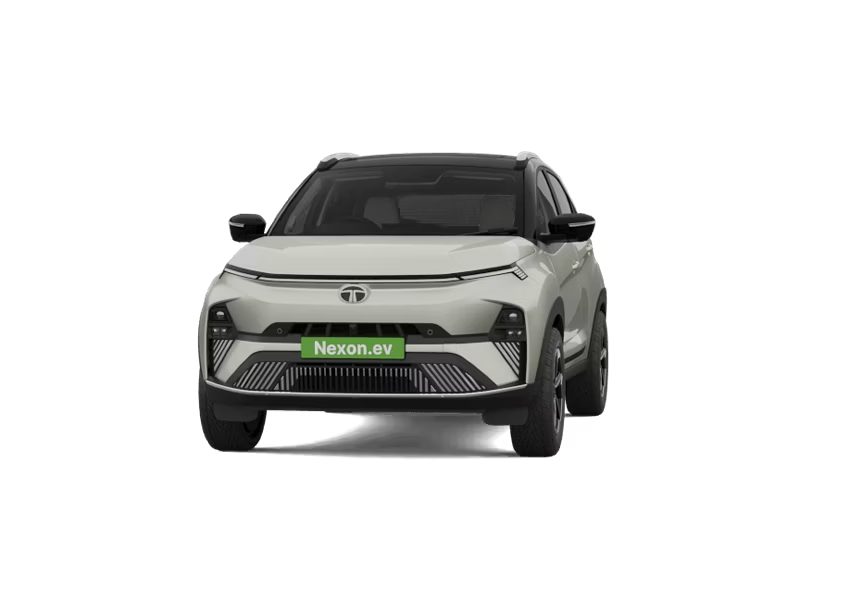
The Tata Nexon EV remains India’s benchmark electric SUV, a title it has earned through years of proven reliability, widespread service availability, and consistent updates. With a 5-star Global NCAP safety rating, a well-rounded feature set including ADAS, a large infotainment screen, and multiple battery options, the Nexon EV strikes a balance that few rivals can match. It’s the go-to recommendation for buyers who want confidence and trust alongside modern EV technology, backed by Tata’s expansive charging network across India.
| Specification | Details |
| Price (ex-showroom) | ₹12.49 – ₹17.49 Lakhs |
| Battery Options | 30 kWh | 40.5 kWh |
| Claimed Range | Up to 465 km (MIDC) |
| Motor & Power | Front-mounted, up to 143 bhp |
| Charging | 7.2 kW AC | DC fast charging (10–80% in ~56 min) |
| Key Features | ADAS Level 2, 12.3-inch touchscreen, connected car tech, V2L, 5-star NCAP rating, panoramic sunroof |
| Body Type | Compact SUV |
| Seating | 5 |
3. MAHINDRA XEV 9S/9e
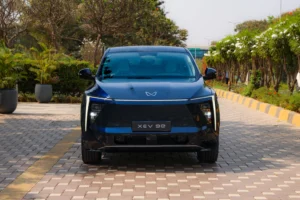
The Mahindra XEV 9S and 9e represent the pinnacle of Mahindra’s electric ambition. It is a premium, three-row SUV built on the brand’s dedicated INGLO EV architecture. It packs cutting-edge Level 2+ ADAS, a massive 79 kWh battery option delivering over 650 km of range, and a host of segment-first technology features including a Harman Kardon sound system and tri-zone climate control. For buyers who want a feature-loaded, seven-seater electric SUV that makes a bold statement, the XEV 9e is in a class of its own in India right now.
| Specification | Details |
| Price (ex-showroom) | ~₹25 – ₹30 Lakhs |
| Battery Options | 59 kWh | 79 kWh |
| Claimed Range | Up to 650+ km (79 kWh, ARAI) |
| Motor & Power | Rear/AWD, up to 282 bhp |
| Charging | DC fast charging up to 175 kW |
| Key Features | Level 2+ ADAS, tri-zone climate, Harman Kardon audio, 3-row 7-seater, 12.3-inch AMOLED, 5-star Bharat NCAP |
| Body Type | Premium Electric SUV |
| Seating | 7 |
4. TATA PUNCH EV

The Tata Punch EV punches well above its price point — quite literally. Blending the rugged micro-SUV silhouette of the popular Punch with a capable electric powertrain, it gives budget-conscious buyers a proper EV experience without making significant compromises. A 25 kWh or 35 kWh battery pack delivers a real-world range well-suited to urban commutes, while features like a 10.25-inch infotainment screen, connected car tech, and multiple drive modes make everyday driving genuinely enjoyable. It’s a CarWale top pick and one of the most popular EVs in India.
| Specification | Details |
| Price (ex-showroom) | ₹9.69 – ₹12.59 Lakhs (updated 2026 pricing) |
| Battery Options | 25 kWh | 35 kWh |
| Claimed Range | Up to 421 km (35 kWh, MIDC) |
| Motor & Power | Front-mounted, up to 122 bhp |
| Charging | 7.2 kW AC | DC fast charging support |
| Key Features | 10.25-inch infotainment, connected car tech, multiple drive modes, V2V charging, rear-view camera |
| Body Type | Micro-SUV / Hatchback SUV |
| Seating | 5 |
5. MAHINDRA BE6
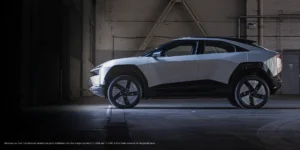
The Mahindra BE 6 is arguably the most visually striking electric car on sale in India today. Built from the ground up on Mahindra’s new INGLO EV platform, it features a coupe-SUV silhouette with razor-sharp LED DRLs, a fully digital interior, and a top-spec 79 kWh battery that claims an extraordinary 682 km range. The BE 6 also gets a 175 kW DC fast charger, meaning 20 minutes is enough for significant top-ups. It’s a car that genuinely challenges global competitors on technology and design.
| Specification | Details |
| Price (ex-showroom) | ~₹18.90 – ₹28.49 Lakhs |
| Battery Options | 59 kWh | 79 kWh |
| Claimed Range | 535 km (59 kWh) | 682 km (79 kWh, ARAI) |
| Motor & Power | Rear-wheel drive, up to 231 bhp (79 kWh) |
| Charging | DC fast charging up to 175 kW (20–80% in ~20 min) |
| Key Features | ADAS Level 2, dual-screen cockpit, Dolby Atmos audio, wireless CarPlay/Android Auto, panoramic roof |
| Body Type | Coupe SUV |
| Seating | 5 |
6. MARIUTI SUZUKI e VITARA
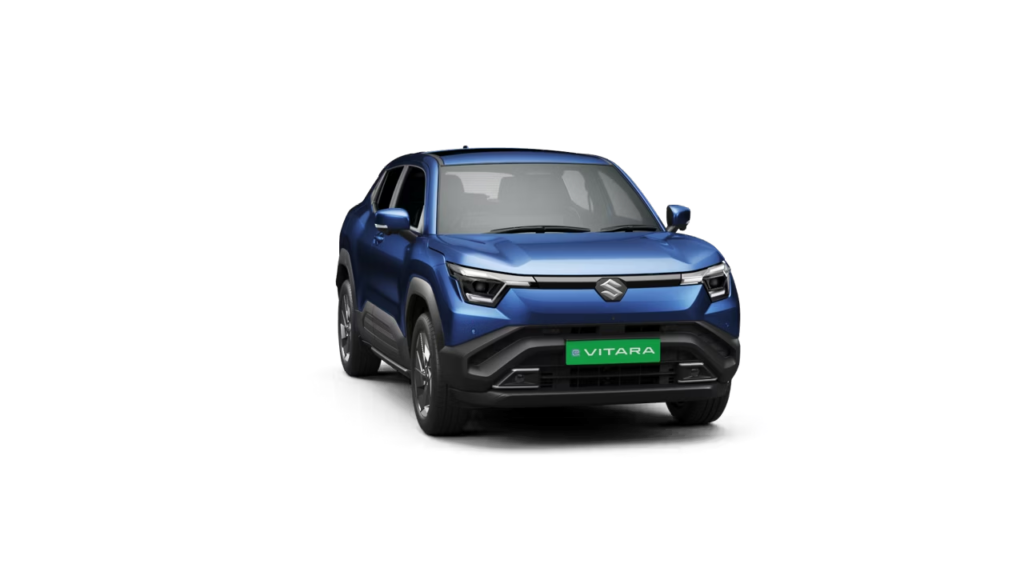
The Maruti e Vitara is a game-changer for a very simple reason, which is the trust factor. Maruti Suzuki’s unparalleled 4,000+ service touchpoints across India address one of the biggest EV anxieties that is after-sales support. Developed jointly with Toyota, the e Vitara brings a 49 kWh or 61 kWh battery, a clean modern interior with a large infotainment screen, and the credibility of India’s most loved automotive brand. For first-time EV buyers hesitant about service and reliability, the e Vitara is the most reassuring answer in 2026.
| Specification | Details |
| Price (ex-showroom) | ~₹13.49 – ₹20 Lakhs |
| Battery Options | 49 kWh | 61 kWh |
| Claimed Range | Up to ~500 km (61 kWh) |
| Motor & Power | Front-mounted; AWD available on top variants |
| Charging | AC home + DC fast charging |
| Key Features | 10.1-inch infotainment, wireless Apple CarPlay/Android Auto, 360 camera, ADAS, 4,000+ service centres pan-India |
| Body Type | Compact SUV |
| Seating | 5 |
7. MG ZS EV
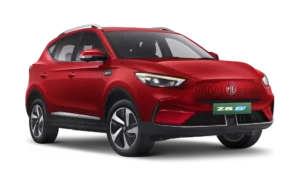
The MG ZS EV holds its own in 2026 as a premium electric SUV that prioritises interior space, driving range, and a refined highway experience. With a 50.3 kWh battery offering a certified range of around 461 km, it suits buyers who regularly undertake inter-city journeys. The latest version comes equipped with ADAS, a large floating touchscreen, and a sophisticated cockpit design. MG’s growing charging infrastructure and Roadside Assistance subscription package add valuable peace of mind for long-distance EV drivers in India.
| Specification | Details |
| Price (ex-showroom) | ₹17.99 – ₹20.50 Lakhs |
| Battery | 50.3 kWh |
| Claimed Range | ~461 km (ARAI) |
| Motor & Power | Front-mounted, 176 bhp |
| Charging | 7.4 kW AC | DC fast charging (10–80% ~60 min) |
| Key Features | ADAS Level 2, 10.1-inch infotainment, panoramic sunroof, connected car tech, ventilated front seats, MG Shield program |
| Body Type | Compact SUV |
| Seating | 5 |
8. KIA CARENS CLAVIS EV
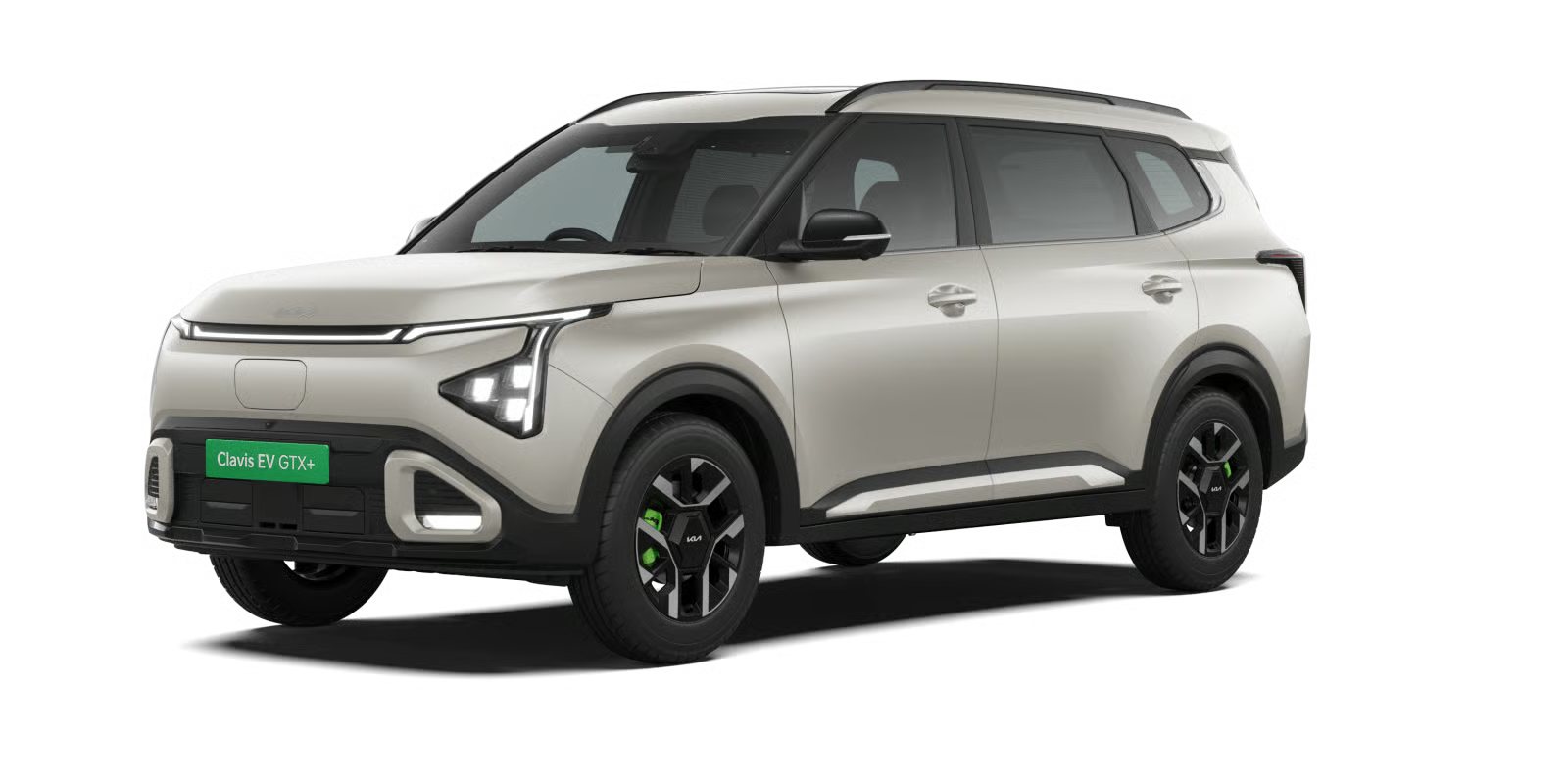
If family practicality is your top priority, the Kia Carens Clavis EV is the clear frontrunner among electric options in 2026. Now updated with a six-seater configuration alongside the original seven-seater layout, it caters perfectly to large Indian families who need flexible seating without sacrificing range. The 51.4 kWh extended-range variant offers a certified 490 km on a charge, while real-world tests confirm a solid ~364 km in mixed conditions. A well-appointed interior, multiple drive modes, five levels of regenerative braking, and an impressive feature list round out a very compelling package.
| Specification | Details |
| Price (ex-showroom) | ~₹18 – ₹25 Lakhs (42 kWh to 51.4 kWh variants) |
| Battery Options | 42 kWh | 51.4 kWh |
| Claimed Range | 404 km (42 kWh) | 490 km (51.4 kWh, MIDC) |
| Motor & Power | 133 bhp (42 kWh) | 169 bhp (51.4 kWh) |
| Charging | AC + DC fast charging; 20–50% in ~27 min (60 kW DC) |
| Key Features | 6/7-seater flex, 5-level regenerative braking, driver-only AC mode, 10.25-inch touchscreen, ADAS, frunk, wireless CarPlay |
| Body Type | Electric MPV |
| Seating | 6 or 7 |
9. TATA CURVV EV
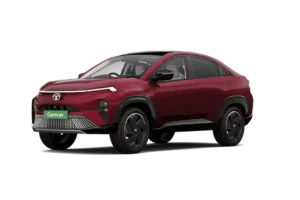
The Tata Curvv EV is Tata’s most design-forward offering yet. It is a coupe-SUV crossover that targets buyers who want their electric car to turn heads. With a sloping roofline, sleek LED light bar, and a distinctly premium cabin housing a 12.3-inch curved display cluster, the Curvv EV delivers style without compromise. It rides on Tata’s updated Gen 2 EV platform and offers a 45 kWh or 55 kWh battery, the latter delivering over 500 km on paper.
| Specification | Details |
| Price (ex-showroom) | ₹17.49 – ₹22.24 Lakhs |
| Battery Options | 45 kWh | 55 kWh |
| Claimed Range | Up to 502 km (55 kWh, MIDC) |
| Motor & Power | Front-mounted, up to 167 bhp |
| Charging | 7.2 kW AC | DC fast charging (10–80% in ~40 min) |
| Key Features | 12.3-inch curved display, ADAS Level 2, panoramic sunroof, V2L, connected car tech, premium audio, ambient lighting |
| Body Type | Coupe SUV |
| Seating | 5 |
10. TATA TIAGO EV
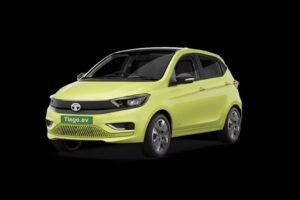
The Tata Tiago EV is India’s most accessible electric car in 2026, and it makes a compelling case that going green doesn’t have to be expensive. Starting at under ₹8 lakhs, it fits squarely within the budget of millions of urban Indian households making the switch from two-wheelers or small petrol hatchbacks. A 19.2 kWh or 24 kWh battery offers a real-world range well-suited to daily city driving, while features like a 10.25-inch infotainment, automatic climate control, and connected car tech make it feel far more premium than its price suggests. Running costs are dramatically lower than any petrol equivalent.
| Specification | Details |
| Price (ex-showroom) | ₹7.99 – ₹11.89 Lakhs |
| Battery Options | 19.2 kWh | 24 kWh |
| Claimed Range | 250 km (19.2 kWh) | 315 km (24 kWh, MIDC) |
| Motor & Power | Front-mounted, up to 75 bhp |
| Charging | 3.3 kW AC | 7.2 kW AC | DC fast charging available on higher variants |
| Key Features | 10.25-inch infotainment, connected car tech, regen braking modes, automatic climate control, rear parking camera |
| Body Type | Hatchback |
| Seating | 5 |
Bonus Picks: Going Above and Beyond
BONUS PICK 1. HYUNDAI CRETA ELECTRIC
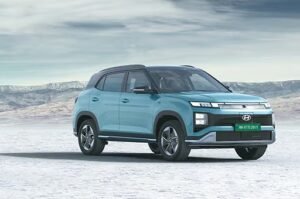
The Hyundai Creta Electric has been a runaway sales success since its launch, and for good reason. It combines the immense trust and brand recognition of the Creta nameplate with a thoroughly modern EV platform. The top-spec 51.4 kWh Long Range variant delivers a certified range of up to 510 km, while the Level 2 ADAS suite, including Highway Driving Assist that handles lane-keeping and adaptive cruise simultaneously, is genuinely class-leading at this price. The dual 10.25-inch curved screens, Bose premium audio, ventilated seats, and V2L capability make this one of the most feature-complete electric cars in India. Real-world range in mixed conditions sits comfortably around 380–420 km.
| Specification | Details |
| Price (ex-showroom) | ₹18.02 – ₹24.70 Lakhs |
| Battery Options | 42 kWh | 51.4 kWh |
| Claimed Range | 420 km (42 kWh) | 510 km (51.4 kWh, MIDC) |
| Motor & Power | 135 bhp (42 kWh) | 171 bhp (51.4 kWh); front-wheel drive |
| Charging | 11 kW AC (full charge in ~4 hr) | DC fast (10–80% in ~58 min) |
| Dimensions | 4,340 mm L × 1,790 mm W × 1,655 mm H; 2,610 mm wheelbase |
| Boot Space | 433 litres |
| Key Features | Level 2 ADAS (Highway Driving Assist), dual 10.25-inch screens, Bose audio (top trim), V2L, ventilated front seats, panoramic sunroof, 200mm ground clearance |
| Safety | 6 airbags, ESC, hill-assist; strong NCAP performance |
| Body Type | Compact SUV |
| Seating | 5 |
BONUS PICK 2. TATA HARRIER EV
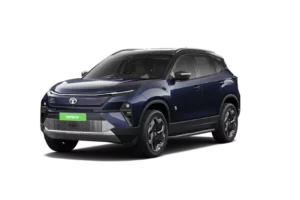
The Tata Harrier EV is arguably the most significant electric car Tata has produced to date. Launched in mid-2025, it carries the bold, butch silhouette of the beloved Harrier ICE while adding a jaw-dropping 627 km certified range, a dual-motor AWD system, and a host of segment-first features including Summon mode, Digital Key, and Auto Park. The 14.5-inch Samsung QLED touchscreen is the largest in any Tata car, and DrivePay UPI integration makes it uniquely Indian in character. The 120 kW DC fast charging capability means a 10–80% top-up in under 30 minutes. A 5-star Bharat NCAP rating and a 67-litre frunk round out a truly impressive package. For those who want a premium, technologically advanced electric SUV with AWD confidence, the Harrier EV sets a new Indian benchmark in 2026.
| Specification | Details |
| Price (ex-showroom) | ₹21.49 – ₹28.99 Lakhs |
| Battery Options | 65 kWh (RWD) | 75 kWh (RWD + AWD) |
| Claimed Range | 538 km (65 kWh) | 627 km (75 kWh, MIDC) |
| Motor & Power | 235 bhp (RWD) | 394 bhp combined (AWD dual-motor) |
| 0–100 km/h | 6.3 seconds (AWD) |
| Charging | 120 kW DC fast (10–80% in ~25–30 min) | 7.2 kW AC |
| Boot Space | 502 litres | 67-litre frunk |
| Key Features | 14.5-inch Samsung QLED display, ADAS Level 2, Summon mode, Digital Key, Auto Park, DrivePay UPI, panoramic sunroof, 360° camera, ambient lighting |
| Safety | 5-star Bharat NCAP (adult + child) |
| Body Type | Full-size Electric SUV |
| Seating | 5 |
India’s electric vehicle landscape in 2026 is nothing short of remarkable. From the sub-₹8 lakh Tata Tiago EV that makes electric mobility accessible to the masses, to the Tata Harrier EV and Mahindra XEV 9e pushing the boundaries of what a made-in-India electric SUV can do, the choices have never been better. Whether you’re optimising for price, range, family space, design, or technology, this list has something for every kind of buyer.
The decision ultimately comes down to your daily use case, charging setup, and budget. Those in cities with shorter commutes will find tremendous value in the Tiago EV or Punch EV. Families planning longer road trips will appreciate the Kia Carens Clavis EV or Hyundai Creta Electric. And buyers who want flagship-grade technology at a premium price will be richly rewarded by the Harrier EV, Mahindra BE 6, or XEV 9e.
2026 is truly the year to go electric in India. The range anxiety is gone, the charging infrastructure is improving rapidly, and the running costs are decisively lower. There has never been a better time to make the switch.
For more in-depth guides, ownership experiences, EV comparisons, insurance tips, and everything a vehicle owner needs, visit vedanshauto.in, your complete resource for smarter vehicle ownership in India. Have questions? Reach out to the team at info@vedanshauto.in.
Frequently Asked Questions (FAQs)
Q1. Which is the most affordable electric car in India in 2026?
The Tata Tiago EV is currently the most affordable electric car in India, with prices starting at just ₹7.99 lakhs (ex-showroom). It offers a real-world range well-suited to urban commutes and comes equipped with features like a 10.25-inch infotainment system and connected car technology, making it an excellent entry point into electric mobility for budget-conscious buyers.
Q2. What is the longest-range electric car available in India in 2026?
The Mahindra BE 6 (79 kWh variant) claims a segment-leading ARAI-certified range of 682 km on a single charge. Among our bonus picks, the Tata Harrier EV (75 kWh) follows closely with a certified range of 627 km. For most buyers, however, real-world range will be somewhat lower depending on driving conditions, speed, and use of climate control.
Q3. How long does it take to charge an electric car at home in India?
Charging time at home depends on the charger type and battery size. With a standard 3.3 kW AC home charger, a full charge can take 10–14 hours overnight, which is fine for most daily commuters. Upgrading to a 7.2 kW AC wall box reduces this to roughly 5–8 hours. DC fast chargers (typically available at public charging stations) can top up most EVs from 10% to 80% in 30–60 minutes depending on the car’s maximum charging rate.
Q4. Is it worth buying an electric car in India in 2026 given the current charging infrastructure?
Yes. 2026 is widely considered the most practical year yet to buy an EV in India. The national charging network has expanded significantly, with Tata Power, Ather Grid, BPCL, and government-backed stations now present across major highways and cities. Most EV manufacturers also include home charger installation as part of the purchase. If you have access to overnight home charging, the case for an EV is very strong in terms of running cost savings and convenience.
Q5. Which electric car is best for a large family in India?
The Kia Carens Clavis EV is the top recommendation for large families, offering flexible six- or seven-seat configurations, a claimed range of up to 490 km, and a well-appointed interior packed with features. The Mahindra XEV 9S/9e is the premium alternative, offering a true seven-seat layout, Level 2+ ADAS, and over 650 km of range, though at a higher price point of ₹25–30 lakhs.
Q6. Do electric cars perform well in Indian weather and road conditions?
Modern EVs sold in India are well-tested for local conditions. Manufacturers like Tata, Mahindra, and MG put their cars through extensive thermal management testing to handle India’s extreme summers. EVs also excel in stop-and-go city traffic. Regenerative braking actually improves efficiency and range in dense urban conditions. Ground clearance on models like the Tata Nexon EV, Mahindra BE 6, and Hyundai Creta EV (200mm) is sufficient for typical Indian road imperfections.
Q7. Which electric car offers the best value for money in India in 2026?
The MG Windsor EV offers outstanding value at its price point, combining a spacious CUV body style, premium cabin features, and a Battery-as-a-Service (BaaS) model that significantly lowers the entry price to ~₹12.04 lakhs. The Tata Nexon EV is another strong value proposition, blending proven reliability, a 5-star NCAP safety rating, and a strong resale value track record, making it a safe financial decision in addition to an environmental one.
Q8. What government incentives are available for buying an electric car in India?
Electric vehicles attract a reduced GST rate of just 5% compared to 18–40% on conventional petrol and diesel cars. Several state governments, including Delhi, Maharashtra, Gujarat, and Rajasthan, offer additional subsidies, road tax waivers, and registration fee exemptions on EVs. The FAME II scheme has also provided purchase incentives on eligible models. It is advisable to check with your state transport office or dealership for the most current and location-specific benefits before purchasing.