Maruti Fronx vs Baleno (2026): Which One is Better?
 Published on 17 June 2026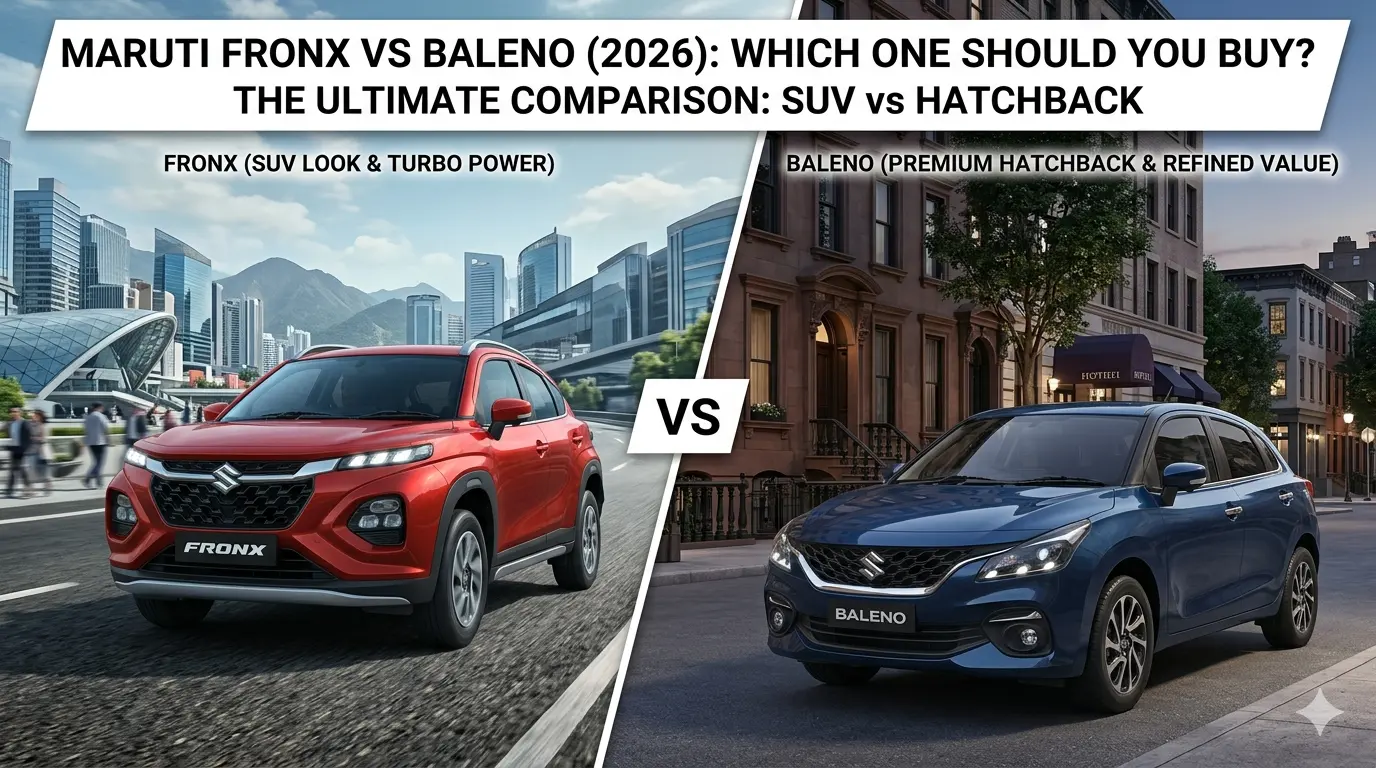
Maruti Suzuki has a knack for creating vehicles that appeal to very different buyers while sharing much of the same engineering underneath. The Maruti Fronx and Maruti Baleno are perfect examples of this approach.
Both models are sold through NEXA dealerships, both are built on Maruti’s Heartect platform and both share the familiar 1.2-litre petrol engine in several variants. Yet they target entirely different audiences. One is a premium hatchback focused on practicality and value, while the other offers similar fundamentals inside a stylish crossover-inspired body with a more premium road presence.
At first glance, the choice may seem straightforward. However, once you start comparing design, performance, features, safety, comfort and overall ownership experience, the decision becomes more interesting.
If you are trying to decide between the Fronx and the Baleno, this detailed comparison will help you understand what each vehicle does well and where each one makes the most sense.
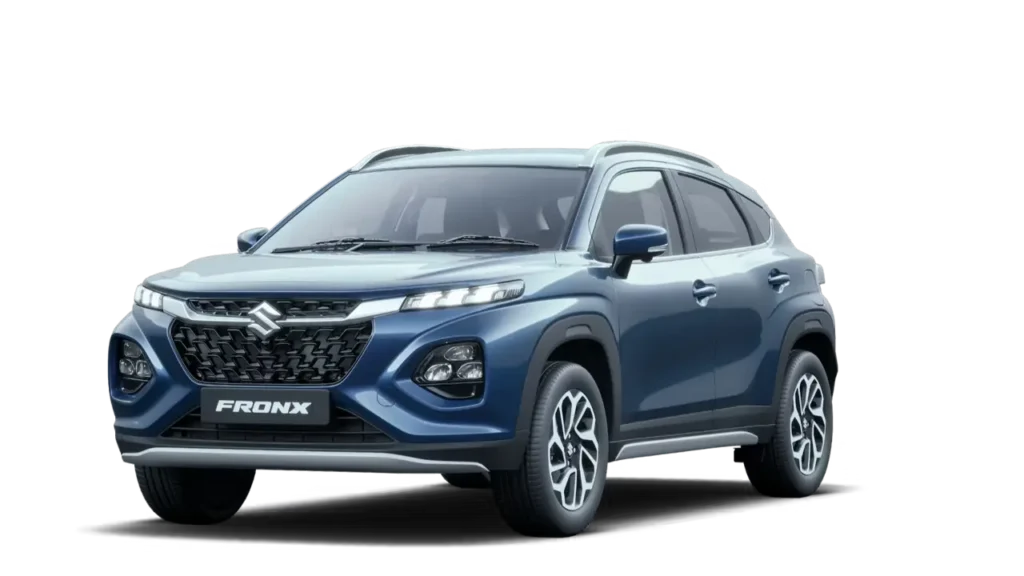
Fronx vs Baleno: Quick Comparison
Here is a quick table comparing Fronx and Baleno:
| Feature | Maruti Fronx | Maruti Baleno |
| Starting Price | Rs. 6.85 lakh (ex-showroom) | Rs. 5.99 lakh (ex-showroom) |
| Top Variant Price | Rs. 11.98 lakh (ex-showroom) | Rs. 9.17 lakh (ex-showroom) |
| Body Style | Compact Crossover | Premium Hatchback |
| Engine Options | 1.2L Petrol, 1.0L Turbo Petrol, CNG | 1.2L Petrol, CNG |
| Maximum Power | 100PS (Turbo), 90PS (NA) | 90PS |
| Maximum Torque | 148Nm (Turbo), 113Nm (NA) | 113Nm |
| ARAI Mileage | Up to 21.79 kmpl | Up to 22.35 kmpl |
| Ground Clearance | 190mm | 170mm |
| Boot Space | 308 litres | 318 litres |
| Seating Capacity | 5 | 5 |
| Safety Rating | Not yet rated by Bharat NCAP | 4-star Bharat NCAP |
| Sales Channel | NEXA | NEXA |
The numbers tell only part of the story. They do not really reveal how different these two vehicles feel in day-to-day ownership.
Design and Road Presence
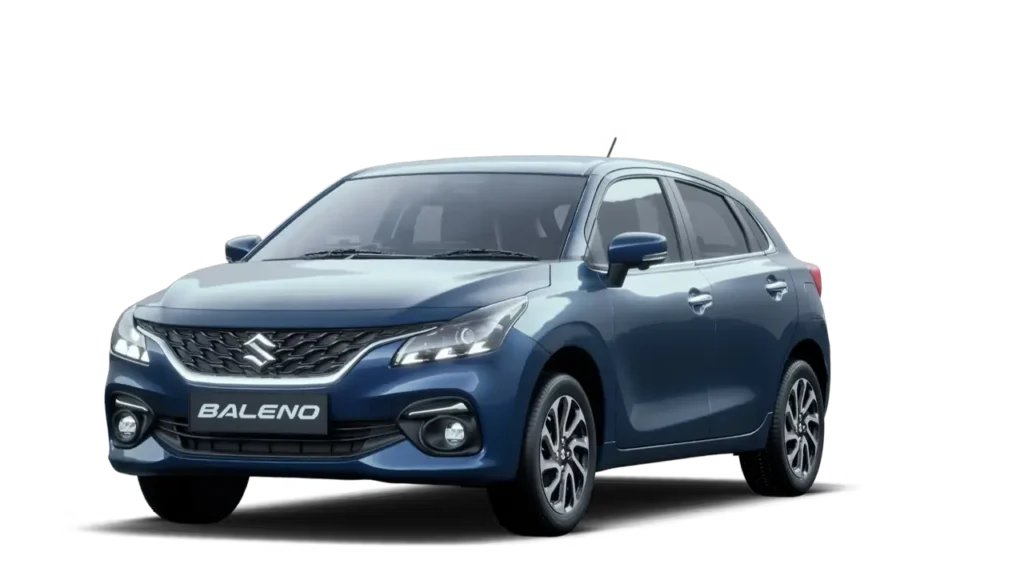
One of the biggest reasons buyers choose one vehicle over another is the design. Fronx and Baleno are different in terms of design.
The Baleno’s formula is that of a traditional premium hatchback. It has a clean, understated and mature design. Its smooth body lines, sleek LED lighting elements and tasteful chrome accents create a sophisticated appearance without appearing too aggressive. So, it appeals to buyers seeking elegance and practicality.
The Fronx takes a more contemporary approach. Even though it shares its underlying architecture with the Baleno, its styling cues are inspired by SUVs and crossovers. The upright front fascia, larger grille, muscular bumper design, raised stance and coupe-like roofline give it a more adventurous character.
The rear design is particularly distinctive, featuring a connected LED light bar that enhances its premium appeal. From a distance, the Fronx appears larger and more expensive than it actually is.
Practicality also plays a role in design. The Fronx has 190mm of ground clearance, which is noticeably higher than the Baleno’s 170mm. So, driving a Fronx can feel less stressful on poorly maintained roads, steep speed breakers and rough urban surfaces.
Inside the cabin, both vehicles offer a premium feel for their segment. The Baleno has a dark blue and grey theme that emphasises sophistication, while the Fronx adopts a black and burgundy combination that feels sportier and more modern.
Neither approach is objectively better. Buyers who prefer a timeless design will appreciate the Baleno, while those seeking a more contemporary and SUV-inspired appearance may like the Fronx.
Engine Options and Performance
The largest difference between these two vehicles lies under the bonnet.
The Baleno is powered by a 1.2-litre naturally aspirated petrol engine producing 90PS and 113Nm of torque. It is available with either a 5-speed manual transmission or a 5-speed AMT. Maruti also offers a factory-fitted CNG variant for buyers prioritising fuel economy.
This engine is known for smoothness, reliability and ease of use. Power delivery is predictable, making the Baleno particularly well suited to urban driving conditions.
The Fronx also offers the same 1.2-litre petrol engine in its lower variants. However, it introduces an option unavailable on the Baleno, which is a 1.0-litre Boosterjet turbo-petrol engine producing 100PS and 148Nm of torque.
Even if the difference in power may not appear dramatic on paper, the additional torque transforms the driving experience. Acceleration feels stronger, overtaking requires less effort and highway cruising becomes more relaxed.
So, those who frequently travel on expressways or enjoy spirited driving will immediately notice the advantage of the turbocharged engine. The Fronx feels more responsive and eager, especially during mid-range acceleration.
In contrast, the Baleno prioritises smoothness over excitement. Its naturally aspirated engine performs admirably in daily commuting situations but does not deliver the same level of engagement as the turbocharged Fronx.
For buyers whose primary motive is transportation, the Baleno remains perfectly adequate. However, if you enjoy driving or regularly undertake long-distance journeys, the Fronx Turbo offers a more rewarding experience.
Transmission Options
Many buyers focus on engine specifications, but overlook the transmission. However, it can have a significant impact on everyday driving.
The Baleno’s automatic variants use a 5-speed Automated Manual Transmission (AMT). Apart from being affordable and efficient, AMTs are relatively simple to maintain. However, they can exhibit noticeable pauses during gear shifts, particularly during aggressive acceleration.
For city driving, this would not be a major issue. Most owners adapt quickly and appreciate the convenience of an automatic transmission at a reasonable price point.
The Fronx Turbo, however, uses a 6-speed torque converter automatic transmission. This setup delivers smoother gear changes and a more refined driving experience. It feels more natural in traffic and more composed during highway cruising.
Buyers considering automatic variants should pay close attention to this distinction. The Fronx Turbo’s transmission provides a noticeable improvement in refinement and driving comfort.
Ride Quality and Comfort
Although both vehicles share the same platform, their driving characteristics differ slightly.
The Baleno’s lower stance contributes to a planted and car-like driving feel. The suspension prioritises comfort, absorbing everyday road imperfections with ease. Around town, it feels light, easy to manoeuvre and effortless to drive.
The Fronx also offers much of this comfort and benefits from a slightly higher seating position. You will appreciate the improved visibility that comes with sitting higher off the ground.
On rough roads, the extra ground clearance allows the Fronx to tackle potholes and uneven surfaces with greater confidence. Drivers are less likely to worry about scraping the underside of the vehicle.
While there is no dramatic difference in ride quality between the two, the Fronx’s crossover characteristics may prove more practical in areas with less than ideal road conditions.
Fuel Efficiency
Fuel economy remains a major consideration for Indian buyers, and both vehicles perform well in this area.
Official ARAI figures suggest:
Baleno 1.2 Petrol Manual: 22.35 kmpl
Fronx 1.2 Petrol Manual: 21.79 kmpl
While Baleno has a slight advantage, the difference is relatively small in real-world usage.
Drivers who travel a lot every year may appreciate the marginal savings offered by the Baleno. However, for most owners, the difference is unlikely to influence the overall ownership experience.
The Fronx Turbo naturally consumes slightly more fuel due to its higher performance potential. Still, it remains reasonably efficient for a turbocharged petrol vehicle.
Both models are also available with factory-fitted CNG technology, providing an economical solution for buyers seeking lower running costs.
Features and Technology
These vehicles are remarkably similar in one area and that is features availability.
Top variants of both models include:
- 9-inch SmartPlay Pro+ touchscreen infotainment system
- Wireless Android Auto and Apple CarPlay
- Automatic climate control
- Head-up display
- 360-degree camera
- Push-button start
- Keyless entry
- Six airbags
- Electronic Stability Control (ESC)
- Hill Hold Assist
- ABS with EBD
The overall equipment list is competitive and covers most modern expectations in this segment.
The Fronx’s key advantages include a wireless phone charger, paddle shifters on Turbo automatic variants and a more SUV-inspired stance with higher ground clearance.
While these additions are useful, they are unlikely to be the sole reason someone chooses the Fronx over the Baleno. The core feature set remains largely identical.
Cabin Space and Practicality
Although the Fronx appears larger from the outside, interior space is surprisingly similar.
The Baleno offers 318 litres of boot space compared to the Fronx’s 308 litres. While the difference is not substantial, the Baleno does provide a small advantage for luggage capacity.
Rear-seat accommodation is also marginally better in the Baleno. Its hatchback design allows for a more conventional roofline, resulting in a slightly airier feeling for taller passengers.
The Fronx counters this with easier ingress and egress. The higher seating position reduces the need to bend down while entering or exiting the vehicle, which can be particularly beneficial for elderly family members.
Families will find both vehicles practical enough for everyday use. Choosing between them largely depends on whether maximum cargo capacity or easier access is more important.
Safety
Safety is an increasingly important factor for modern car buyers, and this is one area where the Baleno currently holds an advantage.
The Baleno has received a 4-star Bharat NCAP safety rating, providing buyers with independently verified crash-test performance for the Indian market. It also includes six airbags, Electronic Stability Control, hill-hold assist, ABS with EBD and ISOFIX child-seat mounts.
The Fronx shares much of its underlying architecture and safety equipment with the Baleno. However, it has not yet received an official Bharat NCAP crash-test rating.
As a result, buyers looking for independently verified crash-test results currently have more concrete information available for the Baleno.
That does not necessarily mean the Fronx is unsafe. Rather, it means there is currently less publicly available crash-test data for the Indian-market model.
For many buyers, this distinction may not matter. For safety-conscious consumers, however, verified test results often provide additional confidence when making an important buying decision.
Ownership Experience and Long-Term Costs
Maruti Suzuki has one of the largest service networks in India, making maintenance and repairs convenient across both urban and rural areas.
Spare parts are generally affordable, service costs remain competitive and long-term reliability is typically strong. These factors contribute significantly to the high resale values that both models enjoy.
The Baleno benefits from a longer track record in the market and a large existing owner base. The Fronx, meanwhile, benefits from strong demand in the rapidly growing compact crossover segment.
From an ownership perspective, you cannot go wrong with either vehicle.
Price and Value for Money
Pricing plays a crucial role in this comparison.
| Variant | Fronx | Baleno |
| Entry-Level | Rs. 6.85 lakh | Rs. 5.99 lakh |
| Mid-Range | Rs. 8-9 lakh | Rs. 7-8 lakh |
| Top-End | Rs. 11.98 lakh | Rs. 9.17 lakh |
The Baleno remains the more affordable option throughout the range.
Depending on the variant selected, buyers can save approximately Rs. 80,000 to Rs. 1 lakh by choosing the Baleno.
For budget-conscious buyers, this price difference is important. The Baleno delivers many of the same strengths while costing less.
The Fronx justifies its premium price through styling, higher ground clearance and access to the turbocharged engine option.
Final Verdict: Which One Should You Buy?
Which one you should buy ultimately depends on your priorities.
Choose the Maruti Baleno if:
- You want the best value for money.
- Fuel efficiency is a top priority.
- You mainly drive in urban environments.
- Verified Bharat NCAP crash-test results are important to you.
- You want slightly better rear-seat space and boot capacity.
- You prefer a refined hatchback design over SUV-inspired styling.
Choose the Maruti Fronx if:
- You prefer the commanding presence of a crossover.
- Higher ground clearance is important for local road conditions.
- You frequently travel on highways.
- You want the performance of the 1.0-litre turbo-petrol engine.
- A smoother torque-converter automatic transmission appeals to you.
- You value styling and road presence enough to pay a premium.
The Baleno continues to offer excellent value for most buyers. It is spacious, efficient, comfortable and has a verified safety rating.
The Fronx, however, charges the equation. Its crossover styling, higher seating position, turbocharged performance and stronger road presence make it a good option for buyers seeking something beyond basic transportation.
Neither choice is wrong. So, if the question is which one is better between Fronx and Baleno, it is simply the one that aligns more closely with your needs, driving habits and budget.
Frequently Asked Questions (FAQs)
No that’s not true. While both vehicles share the Heartect platform and several mechanical components, the Fronx features unique styling, higher ground clearance, different interior design elements and an optional turbocharged petrol engine that is not available on the Baleno.
The Baleno has a slight advantage when it comes to fuel economy. Its 1.2-litre petrol manual variant delivers an ARAI-certified mileage of 22.35 kmpl, compared to 21.79 kmpl for the equivalent Fronx variant.
Yes, it is particularly so for buyers who enjoy driving or regularly travel on highways. The turbocharged engine produces significantly more torque than the standard 1.2-litre petrol engine, resulting in stronger acceleration and improved overtaking performance.
It depends on the variant. The Fronx Turbo comes with a 6-speed torque converter automatic that offers smoother shifts and a more refined driving experience than the Baleno’s 5-speed AMT. However, the Fronx 1.2-litre petrol automatic uses the same 5-speed AMT as the Baleno. Therefore, the transmission advantage is exclusive to the Fronx Turbo automatic.
Both cars are suitable for family use. The Baleno offers slightly more boot space and rear-seat room, while the Fronx provides easier entry and exit thanks to its higher seating position.
The Baleno currently holds an official 4-star Bharat NCAP safety rating. The Fronx has not yet been tested by Bharat NCAP, making direct comparison difficult at present.
Yes. Maruti Suzuki offers factory-fitted CNG variants of both the Baleno and the Fronx with the 1.2-litre petrol engine.
Both models are expected to retain their value well due to Maruti Suzuki’s strong brand presence, extensive service network and high demand in the used-car market. The Baleno benefits from an established reputation, while the Fronx benefits from growing demand for crossover-style vehicles.
📚 Also Read