Kia Sonet Manual vs Automatic: Which Gearbox Is Better in 2026?
Published on 4 September 2026
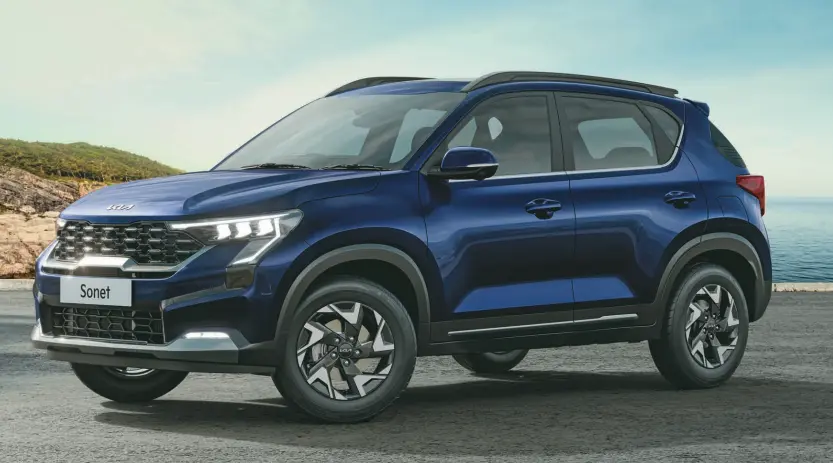
The 2026 Kia Sonet is available with several gearbox options. Depending on the engine and variant, buyers can choose between a 5-speed manual, 6-speed manual, 6-speed iMT, 7-speed DCT and 6-speed torque converter automatic.
This wide choice is useful, but it can also make the decision confusing. The manual versions cost less and give the driver greater control. The automatic versions are more comfortable in traffic but carry a higher purchase price. The iMT sits somewhere between the two.
So, should you buy the Kia Sonet manual, iMT, DCT or diesel automatic? This comparison explains how each gearbox performs in city traffic, on highways and over long-term ownership.
Kia Sonet Manual vs Automatic: Quick Comparison
| Point | Manual | iMT | DCT Automatic | Diesel Automatic |
| Clutch pedal | Yes | No | No | No |
| Manual gear changes | Yes | Yes | No | No |
| Available engine | 1.2L petrol and 1.5L diesel | 1.0L turbo-petrol | 1.0L turbo-petrol | 1.5L diesel |
| Number of gears | 5 or 6 | 6 | 7 | 6 |
| City convenience | Average | Good | Very good | Very good |
| Highway driving | Good | Good | Very good | Very good |
| Performance | Depends on engine | Responsive | Quickest petrol combination | Strong and effortless |
| Purchase price | Lowest | Higher than regular manual | Higher | Higher |
| Best for | Budget-conscious buyers | Buyers wanting clutch-free driving with manual control | Petrol buyers wanting performance and convenience | High-running buyers wanting comfort and torque |
Kia Sonet Gearbox and Engine Options
According to the 2026 Kia Sonet brochure, the following engine and transmission combinations are available:
| Engine | Power | Torque | Gearbox options |
| 1.2L naturally aspirated petrol | 83 PS | 115 Nm | 5-speed manual |
| 1.0L turbo-petrol | 120 PS | 172 Nm | 6-speed iMT, 7-speed DCT |
| 1.5L diesel | 116 PS | 250 Nm | 6-speed manual, 6-speed automatic |
Your choice of gearbox is therefore connected to the engine you select. For example, the 1.2-litre petrol is not available with an automatic, while the turbo-petrol does not get a conventional manual gearbox with a clutch pedal.
Kia Sonet 5-Speed Manual
The 5-speed manual is offered with the 1.2-litre naturally aspirated petrol engine. This is the most affordable Sonet powertrain and is aimed primarily at buyers with a limited budget.
The engine provides smooth and predictable power delivery. It should be sufficient for commuting, school runs and other everyday journeys. The manual gearbox also allows the driver to select gears according to the traffic and road conditions.
Its main limitation is performance. With 83 PS and 115 Nm, this is the least powerful Sonet engine. It can manage occasional highway trips, but overtaking with several passengers and luggage may require planning and frequent downshifts.
The clutch and gear changes can also become tiring in heavy traffic. If most of your driving takes place on crowded roads, the lower purchase price must be weighed against the effort of operating the clutch every day.
Who should choose it?
Choose the 1.2-litre petrol manual if:
- You want the most affordable Kia Sonet.
- Most of your journeys are short or within the city.
- You are comfortable driving a manual.
- You do not need quick acceleration.
- Keeping the initial purchase cost low is your priority.
Kia Sonet 6-Speed Diesel Manual
The diesel manual combines a 6-speed gearbox with the 1.5-litre diesel engine. It produces 250 Nm of torque, substantially more than either petrol engine.
This combination is particularly suitable for highway use. The strong torque helps while overtaking, climbing inclines and driving with a full load. The sixth gear also allows the engine to operate more comfortably at highway speeds.
The diesel manual has the strongest claimed mileage in the Sonet range. Autocar India reports an ARAI-certified figure of 24.1 km/l. Actual mileage will be lower and will depend on traffic, driving style, air-conditioner use and vehicle load.
The disadvantage is clutch use. A diesel manual can be tiring if your daily commute involves long traffic jams. Buyers who mainly take short city trips should also consider whether they drive enough to justify paying more for a diesel.
Who should choose it?
The diesel manual makes sense if:
- You cover a high number of kilometres every month.
- A large part of your driving is on highways.
- You want the strongest claimed fuel efficiency.
- You frequently travel with passengers and luggage.
- You prefer manual control and do not mind using the clutch.
Kia Sonet iMT
The 6-speed iMT is paired with the 1.0-litre turbo-petrol engine. It is not a conventional automatic gearbox.
An iMT allows the driver to change gears using the gear lever, but there is no clutch pedal. Sensors and electronic actuators operate the clutch whenever the driver shifts gears.
This arrangement reduces left-leg fatigue in traffic while retaining manual gear selection. It can be a useful middle ground for someone who does not want a fully automatic car but would like to avoid using a clutch.
However, an iMT still requires driver involvement. You must select the correct gear, and the car will not shift through all the gears automatically like a DCT or torque converter automatic. Some drivers may also need time to become comfortable with lifting off the accelerator slightly during gear changes.
Advantages of the Sonet iMT
- No clutch pedal
- Greater control over gear selection
- Stronger performance than the 1.2-litre petrol
- Easier to drive in traffic than a conventional manual
- Usually costs less than the DCT version
Limitations of the Sonet iMT
- Not a fully automatic gearbox
- Driver must change gears manually
- Requires some adjustment in driving style
- May not suit buyers who want complete automatic convenience
The iMT is suitable for someone who enjoys selecting gears but wants relief from continuous clutch use.
Kia Sonet 7-Speed DCT
The 7-speed dual-clutch transmission is available with the 1.0-litre turbo-petrol engine. This is the quickest and sportiest petrol powertrain in the Sonet range.
A DCT uses two clutches to prepare the next gear in advance. This allows it to change gears quickly and provide uninterrupted acceleration. The turbo-petrol engine’s 120 PS and 172 Nm further improve performance.
The DCT is convenient in traffic because it does not require manual gear changes. It also works well on highways, where its quick shifts make overtaking easier.
However, buyers should understand how a DCT behaves in slow traffic. It may not always feel as smooth as a conventional torque converter automatic when the car is crawling at very low speeds. The driver should avoid repeatedly using the accelerator to hold the car on an incline or making the vehicle creep unnecessarily for long periods.
This does not mean a DCT should be avoided for city use. It simply needs to be driven correctly, particularly in prolonged stop-and-go traffic.
Who should choose the DCT?
Choose the turbo-petrol DCT if:
- You want a petrol automatic.
- You prefer quick acceleration and responsive performance.
- Your driving includes both city roads and highways.
- You do not want to change gears manually.
- You are willing to pay more for performance and convenience.
Kia Sonet 6-Speed Diesel Automatic
The diesel automatic uses a 6-speed torque converter gearbox. It combines the convenience of an automatic with the diesel engine’s 250 Nm of torque.
A torque converter automatic generally provides smooth and predictable performance at low speeds. This makes the Sonet diesel automatic well suited to slow traffic. It should feel easier and more relaxed than the diesel manual during a daily city commute.
The strong torque also makes it suitable for highway driving. Overtaking requires less effort, and the engine should handle passengers and luggage comfortably.
However, the diesel automatic does not provide the same claimed mileage advantage as the manual. Autocar India reports 18.6 km/l for the diesel automatic compared with 24.1 km/l for the diesel manual.
Therefore, buyers should not select it only because it is a diesel. Its main strengths are effortless performance, low-speed smoothness and convenience rather than exceptionally high claimed mileage.
Who should choose it?
The diesel automatic is suitable if:
- You want an automatic for heavy city traffic.
- You also travel frequently on highways.
- You prefer strong low-speed pulling power.
- You regularly carry passengers or luggage.
- Comfort is more important than achieving the highest possible mileage.
Which Sonet Gearbox Is Best for City Traffic?
For heavy city traffic, the diesel automatic offers the smoothest and most relaxed experience. Its torque converter gearbox is well suited to slow movement, while the diesel engine provides strong power without frequent acceleration.
The turbo-petrol DCT is also convenient and delivers better performance. However, its low-speed behaviour may not feel as smooth as the torque converter automatic in crawling traffic.
The iMT reduces clutch-related fatigue but still requires manual gear changes. It is more convenient than a regular manual, although it does not offer the complete ease of a DCT or diesel automatic.
The 1.2-litre petrol manual is suitable for buyers with a lower budget, but frequent clutch use can become tiring during a long daily commute.
Which Gearbox Is Better on Highways?
The turbo-petrol DCT and diesel automatic are both strong highway choices.
The DCT provides quick gear changes and responsive acceleration. It should appeal to drivers who want a more energetic petrol SUV.
The diesel automatic feels effortless because of its 250 Nm torque. It is especially suitable for long-distance travel with a full passenger and luggage load.
For buyers focused on fuel efficiency, the diesel manual remains the strongest option. It combines high torque, a sixth gear and the best claimed mileage in the line-up.
The 1.2-litre petrol manual can manage occasional highway trips, but it is not the ideal choice for frequent high-speed travel with a full load.
Manual vs Automatic Mileage
The mileage comparison is not as simple as saying that every manual is more efficient than every automatic. The engine makes a major difference.
The available claimed figures include:
| Powertrain | Claimed mileage |
| 1.2L petrol manual | 18.8 km/l |
| 1.0L turbo-petrol DCT | 18.7 km/l |
| 1.5L diesel manual | 24.1 km/l |
| 1.5L diesel automatic | 18.6 km/l |
The 1.2-litre petrol manual and turbo-petrol DCT have almost identical claimed figures. The biggest difference is between the diesel manual and diesel automatic.
Mileage figures for the current turbo-petrol iMT should be confirmed with the dealer because the 2026 brochure does not provide official fuel-efficiency figures.
Remember that claimed mileage is measured under controlled conditions. Real-world results depend on traffic, route, driving style, tyre pressure, air-conditioner use and vehicle load.
Purchase Price and Maintenance
Manual Sonet variants generally have the lowest starting prices. They use relatively straightforward gearbox technology, although the clutch may eventually require replacement depending on driving conditions and driving habits.
The iMT has additional sensors and actuators to operate the clutch. It removes the clutch pedal but still uses a clutch mechanism.
The DCT is more complex and may be more expensive to repair outside warranty. Following Kia’s service schedule and using the gearbox correctly in traffic are important for long-term reliability.
The torque converter automatic is generally considered suitable for varied Indian driving conditions, including stop-and-go traffic. However, repairs can still be costly if a major gearbox problem occurs.
Before choosing any automatic, check the applicable warranty, extended-warranty options and service requirements. The brochure states that the Sonet comes with a three-year, unlimited-kilometre warranty, with optional extended warranty coverage available.
Kia Sonet Manual vs Automatic: Final Verdict
There is no single Sonet gearbox that suits every buyer.
The 1.2-litre petrol manual is the best choice for buyers who want the lowest purchase price and mainly drive within the city.
The diesel manual is suitable for high monthly running and frequent highway journeys. It provides strong torque and the best claimed mileage in the range.
The turbo-petrol iMT is a sensible middle option. It removes the clutch pedal but still allows the driver to select gears manually.
The turbo-petrol DCT is the best choice for buyers seeking strong petrol performance with full automatic convenience.
The diesel automatic is the most relaxed all-round option for buyers who want smooth city driving, strong highway performance and plenty of torque. However, it costs more and gives up much of the diesel manual’s claimed mileage advantage.
Take a test drive in conditions similar to your daily route before deciding. A short drive on an empty road may not reveal how a gearbox behaves in traffic, during parking or at low speeds.
Frequently Asked Questions
Is the Kia Sonet iMT an automatic?
The Sonet iMT does not have a clutch pedal, but the driver must change gears manually. It offers some of the convenience of an automatic without being a fully automatic gearbox.
Which Kia Sonet automatic is better, DCT or diesel AT?
The DCT offers quicker gear changes and stronger petrol performance. The diesel torque converter automatic is generally smoother at low speeds and provides considerably more torque. Your choice should depend on fuel preference, monthly running and driving conditions.
Which Kia Sonet gearbox gives the best mileage?
The 1.5-litre diesel with the 6-speed manual gearbox has the highest claimed mileage at 24.1 km/l. Actual mileage will vary with traffic, driving style and road conditions.
Is the Kia Sonet DCT suitable for heavy traffic?
The DCT can be used in city traffic, but it may not feel as smooth as the diesel torque converter automatic while crawling at very low speeds. Avoid unnecessary creeping and use the brake when the vehicle is stationary.
Does the Kia Sonet 1.2 petrol get an automatic gearbox?
No, the 1.2-litre naturally aspirated petrol engine is offered only with a 5-speed manual gearbox. Petrol automatic buyers must choose the 1.0-litre turbo-petrol DCT.
Is the Sonet diesel automatic worth buying?
It can be worth buying if you want a smooth automatic, strong torque and a combination of city and highway usability. However, it is not the best choice if your main priority is the highest claimed mileage or the lowest purchase price.
ALSO READ: KIA SELTOS MANUAL VS AUTOMATIC