Most Reliable SUV Brands in India (2026): An Evidence-Based Ranking
 Published on 1 July 2026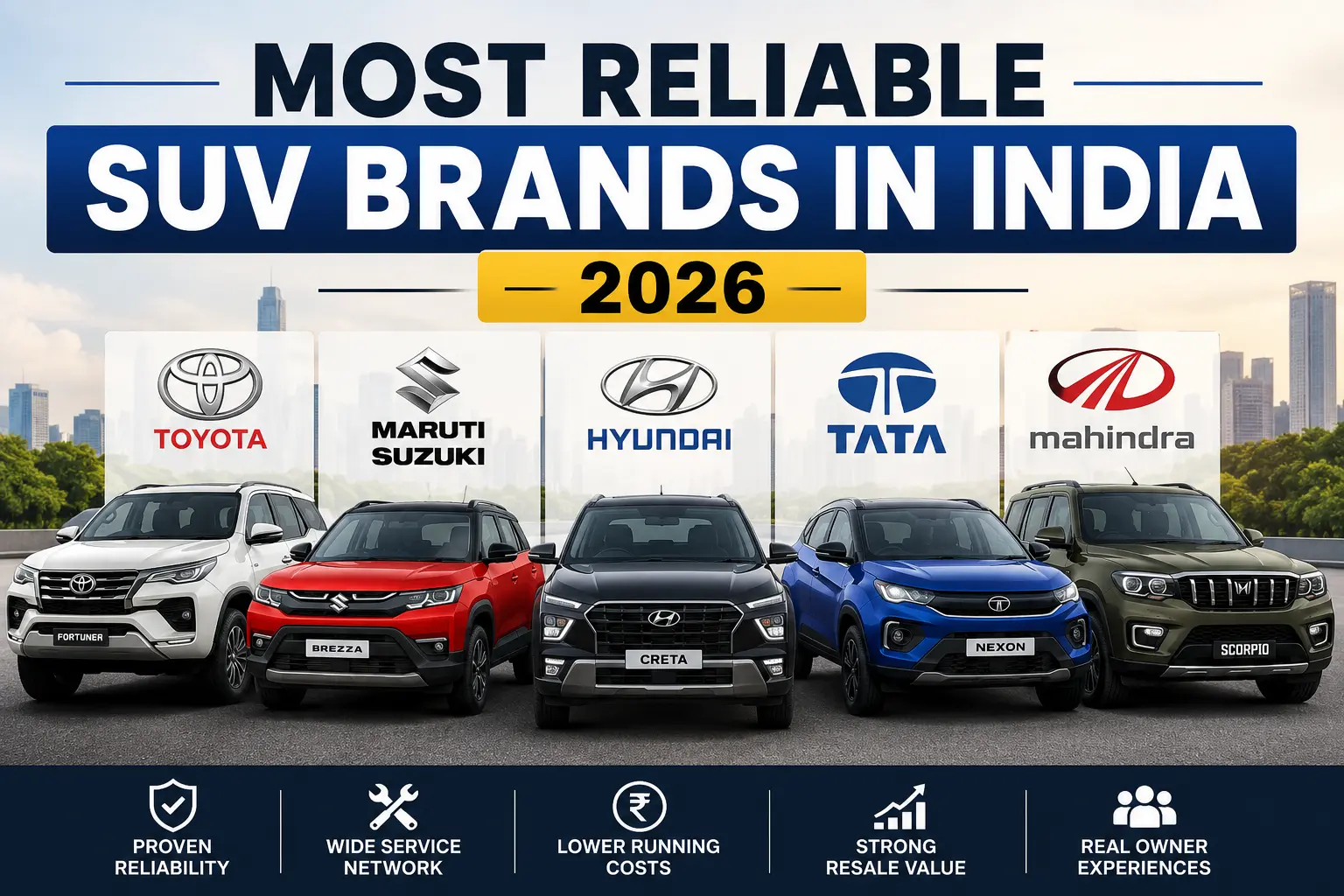
Buying a reliable SUV is about far more than choosing a vehicle that starts without fuss every morning. Real reliability means your SUV keeps performing well for years, does not land you in the service centre every other month, holds its value when you sell it, and does not become a headache to service wherever you happen to live in India.
This is also why judging reliability in India is not straightforward. Unlike markets like the US or Germany, we do not have one single, comprehensive study that tracks every manufacturer and model over the long term. So buyers usually end up piecing together information from initial quality studies, service network size, resale numbers, real owner experiences and how a brand’s engines and gearboxes have held up over the years.
This article looks at all of these factors together, rather than just going by sales charts or brand popularity. A car can sell well simply because it is priced right or looks good, but that does not always mean it will give you a trouble-free ownership experience.
Based on the best publicly available evidence, these are the five SUV brands that stand out for reliability in India in 2026.
How We Ranked These Brands
There is no single number that tells you everything about reliability, so we looked at a mix of factors.
- Initial quality: How many problems owners report in the first few months of ownership, based on studies like J.D. Power’s India Initial Quality Study (IQS).
- Engineering track record: Whether the engines and transmissions have proven themselves reliable across multiple generations.
- Service network: How easy it is to find an authorised workshop, a trained technician, and genuine spare parts near you.
- Ownership experience: What long-term owners actually say about common issues and how easy the car is to maintain.
- Resale value: Strong resale usually means buyers trust that the car will hold up well over time.
We have deliberately ranked manufacturers rather than individual models, as reliability can vary even within the same brand depending on the engine, transmission and model generation.
Representative SUVs
| Brand | Models influencing this ranking |
| Toyota | Fortuner, Hyryder, Innova HyCross |
| Maruti | Brezza, Grand Vitara |
| Hyundai | Venue, Creta, Alcazar, Tucson |
| Mahindra | Scorpio, XUV700, Thar, Bolero Neo |
| Tata | Punch, Nexon, Harrier, Safari |
1. Toyota: The Benchmark for Long-Term Reliability
If reliability was the only thing that mattered, Toyota would be an easy first choice for most Indian buyers.
Toyota’s engineering approach has stayed consistent for years. Instead of making big mechanical changes with every new model, the brand tends to refine proven engines and gearboxes over long product cycles. This approach may appear conservative compared with rivals chasing the latest technology, but it has built one of the strongest reliability reputations in the business.
Indian owners have seen this play out first hand. The Fortuner, Innova Crysta, Innova HyCross and Urban Cruiser Hyryder have all built solid reputations for long-term dependability. The Innova HyCross, in particular, ranked highest in the MUV segment of J.D. Power’s India IQS, scoring 83 problems per 100 vehicles, well below the industry average of 122.
Resale value is another big reason Toyota tops this list. Very few brands in India hold their value the way Toyota does after five or even ten years of ownership. That kind of resale strength usually comes from years of buyers trusting that the car will still run well long after the warranty runs out.
Toyota’s service network is smaller than Maruti Suzuki’s, especially in rural areas, but it has been growing steadily and continues to score well on customer satisfaction.
The catch is price. Toyota SUVs usually cost more upfront than similar rivals. But many owners end up recovering that extra cost through slower depreciation and fewer surprise repair bills down the line.
The flip side of Toyota’s conservative engineering philosophy is that its vehicles sometimes feel less feature-rich than similarly priced competitors. Buyers are effectively trading the latest technology for proven mechanical durability.
2. Maruti Suzuki: India’s Most Practical Choice
Toyota may lead on pure engineering durability, but for a large number of Indian buyers, Maruti Suzuki is simply the more practical option.
The biggest reason is reach. No other passenger vehicle brand comes close to Maruti Suzuki’s service network. In FY26 alone, the company added 502 new service touchpoints, its biggest single-year expansion ever, taking its total service network to 5,926 touchpoints spread across more than 3,000 cities and towns. The company also services close to 2.84 crore vehicles a year through this network, and it plans to grow this to around 8,000 touchpoints by FY2031. Whether you live in a metro or a small town, finding a trained technician or genuine spare parts is rarely a struggle.
Maintenance costs are also among the lowest in the country, and spare parts are both widely available and reasonably priced, which keeps long-term ownership costs down.
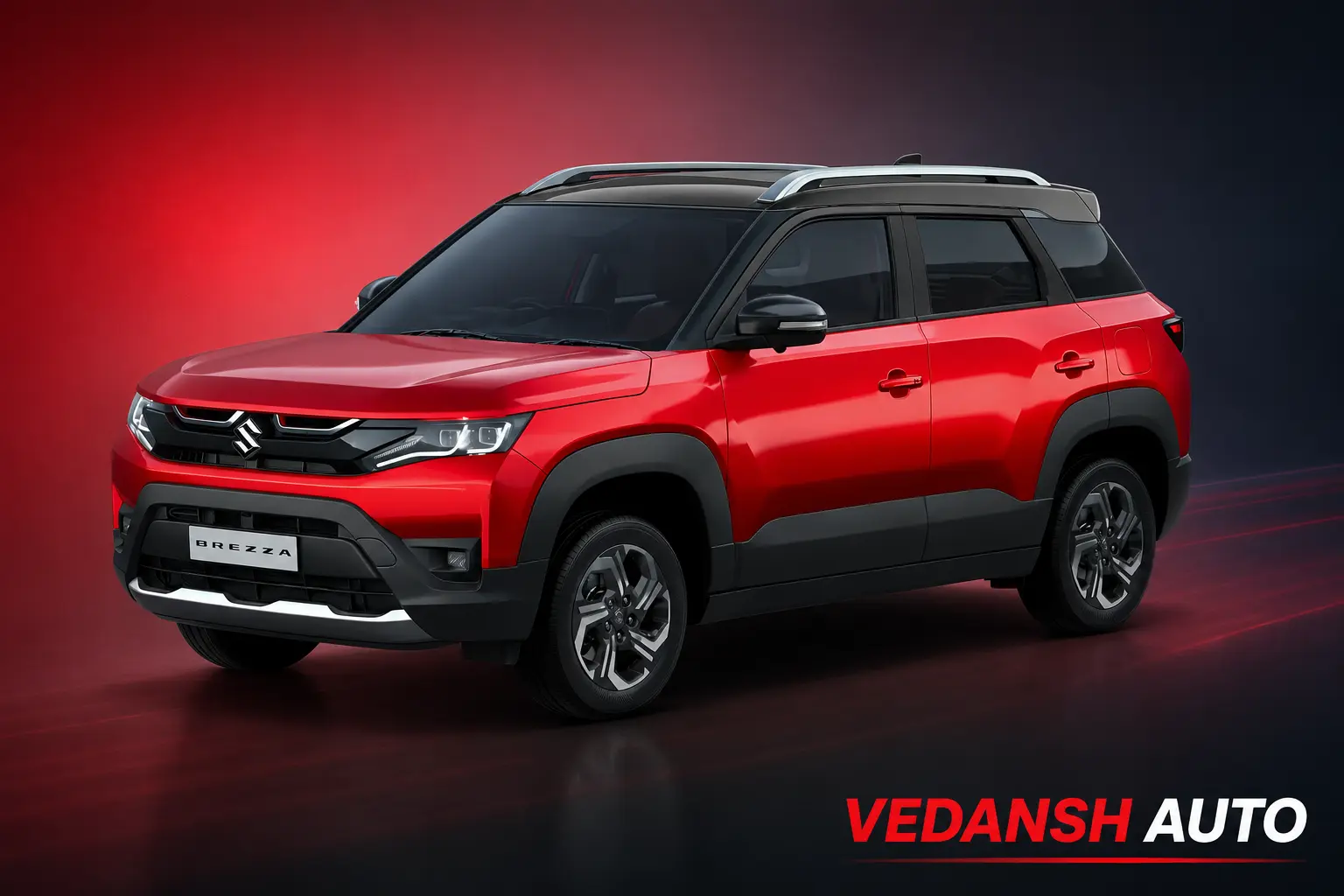
The Brezza has built a strong reputation for dependable ownership, thanks to its simple, naturally aspirated petrol engine. The Grand Vitara, meanwhile, blends Maruti’s low-cost ownership approach with hybrid technology that has been well received, especially by buyers chasing better mileage. It has established itself as one of India’s most popular hybrid SUVs while maintaining Maruti’s reputation for affordable ownership.
Maruti’s resale values also remain among the strongest in India, particularly for its popular models.
Maruti Suzuki may not carry Toyota’s global reputation for mechanical longevity, but between low maintenance costs, an unmatched service network and proven reliability, it remains one of the safest bets for everyday ownership.
Some buyers may also find that Maruti prioritises ease of ownership over premium cabin materials or outright performance, particularly compared with similarly priced rivals.
3. Hyundai: Reliability Built Through Steady Refinement
Hyundai has quietly turned into one of India’s most dependable mainstream brands.
Rather than betting everything on one standout model, Hyundai has built an entire portfolio of SUVs that consistently deliver a predictable ownership experience across price segments.
The Venue, Creta, Alcazar and Tucson all run on engines that have been refined over several generations. Instead of frequent mechanical overhauls, Hyundai tends to improve reliability gradually while introducing new technology carefully.
The Creta deserves a special mention here. It has remained one of India’s best-selling SUVs for years, and that is not just down to features. Long-term ownership reports generally describe the Creta as a dependable SUV with predictable maintenance costs.
Hyundai has also invested heavily in expanding its dealership and service network in recent years. Combined with decent parts availability and competitive maintenance packages, this has strengthened buyer confidence quite a bit.
Hyundai vehicles can cost a little more to maintain than a comparable Maruti Suzuki, but they are widely seen as dependable daily drivers with strong long-term ownership prospects.
4. Mahindra: Built to Handle Tough Indian Roads
Mahindra has reinvented itself over the last decade.
Once known mainly for rugged, no-frills utility vehicles, it now makes some of India’s most desirable SUVs while holding on to the toughness that built its name in the first place.
The Scorpio, Bolero, Thar and XUV 7X0 have all shown that Mahindra understands Indian road conditions better than most. These are vehicles engineered to handle rough terrain, high mileage and demanding daily use, the kind of punishment that would trouble many crossovers built mainly for smooth city roads.
The Scorpio’s continued popularity says a lot here. Even with newer rivals entering the market, the Mahindra Scorpio recently became India’s best-selling SUV, largely because buyers trust its durability and mechanical toughness.
Mahindra has also pushed into more premium territory without losing its engineering strength. The XUV700 and the newer XUV 7XO combine modern technology with the brand’s traditional focus on ruggedness.
Where Mahindra still trails Toyota, Maruti Suzuki and Hyundai is consistency in after-sales service. Owner experiences tend to vary more from dealership to dealership compared to the three brands above it.
That said, if durability, highway touring or frequent travel on tough roads are high on your list, Mahindra deserves serious consideration.
5. Tata Motors: Big Improvements, Still Some Way to Go
Few manufacturers in India have improved as quickly as Tata Motors.
A decade ago, Tata cars were rarely seen as a benchmark for refinement or reliability. Today, the company has completely rebuilt its product strategy, and its SUVs now compete strongly on safety, design and features.
The Punch, Nexon, Harrier and Safari have all strengthened Tata’s position in the SUV segment. Independent crash tests have repeatedly shown impressive structural strength, and the improvements in fit, finish and overall build quality are clear across the range. Tata’s passenger vehicle sales and service network has also grown to more than 3,500 touchpoints across the country, making ownership more convenient than it used to be.
That said, reliability is about more than just mechanical strength.
Across large ownership communities such as Team-BHP and CarsIndia, software-related complaints appear more frequently than for Toyota or Maruti Suzuki, although many owners continue to report trouble-free experiences.
None of these concerns outweigh Tata’s strengths, but they are enough to keep the brand at the bottom of this evidence-based ranking.
Even so, the direction Tata is heading in is encouraging, and the gap between it and the brands above it has narrowed quite a bit in recent years.
Reliability Comparison at a Glance
| Brand | Engineering Reliability | Service Reach | Maintenance Cost | Resale Value | Overall Reliability |
| Toyota | Excellent | Very Good | Moderate | Excellent | 5/5 |
| Maruti Suzuki | Excellent | Excellent | Excellent | Excellent | 5/5 |
| Hyundai | Very Good | Very Good | Very Good | Very Good | 4/5 |
| Mahindra | Very Good | Good | Moderate | Very Good | 4/5 |
| Tata Motors | Good | Good | Moderate | Good | 3/5 |
Reliability Is More Than Just the Badge on the Bonnet
Even the most reliable manufacturer can occasionally put out a problematic model, and a brand with a so-so overall reputation can still build one genuinely dependable vehicle. The badge alone does not tell the whole story.
How the vehicle is maintained matters just as much. Regular servicing, timely replacement of wear and tear parts, sensible driving habits and the quality of your local service centre all play a role in how reliable your car actually turns out to be.
So it is worth judging the specific model you plan to buy on its own merits, alongside the brand’s overall reputation, rather than picking purely on brand ranking.
Reliability Doesn’t Mean Problem-Free
No vehicle is immune from faults.
Reliability simply means the likelihood of experiencing serious or repeated issues is lower over the vehicle’s lifetime. Regular maintenance, driving habits, fuel quality and the quality of servicing can have just as much influence on long-term ownership as the manufacturer’s reputation.
Final Verdict
If long-term peace of mind is your main goal, Toyota remains the benchmark for reliability in India. Its engineering approach, strong quality record and exceptional resale value make it hard to beat.
Maruti Suzuki comes in close behind, pairing dependable mechanicals with India’s largest service network and some of the lowest ownership costs around. For a lot of buyers, that combination makes it the more practical everyday choice.
Hyundai earns its place through years of steady refinement and consistently dependable ownership, while Mahindra’s rugged engineering makes it a strong pick for buyers who regularly cover long distances or drive on demanding roads.
Tata Motors rounds out the list. Its progress over the last decade has been genuinely impressive, especially on safety and build quality, but there is still room to improve on software reliability and consistency in after-sales service.
At the end of the day, no ranking can replace doing your own homework on the specific SUV you are considering. Take a proper test drive, talk to existing owners in your city, and check how strong the local service network actually is before you decide. A reliable SUV is not just one that rarely breaks down. It is one that keeps giving you confidence, year after year of ownership.
Frequently Asked Questions
Which SUV brand is the most reliable in India in 2026?
Toyota and Maruti Suzuki are generally seen as the two most reliable SUV brands in India. Toyota leads on long-term engineering durability and resale value, while Maruti Suzuki wins on service network size and low maintenance costs.
Which SUV brand has the largest service network in India?
Maruti Suzuki has India’s largest after-sales service network by far, with 5,926 touchpoints across more than 3,000 cities and towns as of FY26, and plans to expand this to around 8,000 by FY2031.
Is Tata Motors reliable for long-term SUV ownership?
Tata has improved a lot on safety and build quality in recent years, and models like the Nexon and Punch are solid choices. However, owners do report occasional software and electrical issues more often than with Toyota, Maruti Suzuki or Hyundai.
Which SUV brand offers the best resale value in India?
Toyota and Maruti Suzuki SUVs tend to hold their resale value the best in India, largely due to consistent demand and a strong reputation for reliability.
Are Mahindra SUVs a good choice for highway driving and tough roads?
Yes. Mahindra SUVs like the Scorpio, Thar and XUV700 are specifically engineered to handle rough terrain and high mileage, making them a strong choice for buyers who frequently drive long distances or on challenging roads.