Tata EV Battery-as-a-Service: Which Cars Get It and How Much Does It Cost?
 Published on 29 September 2026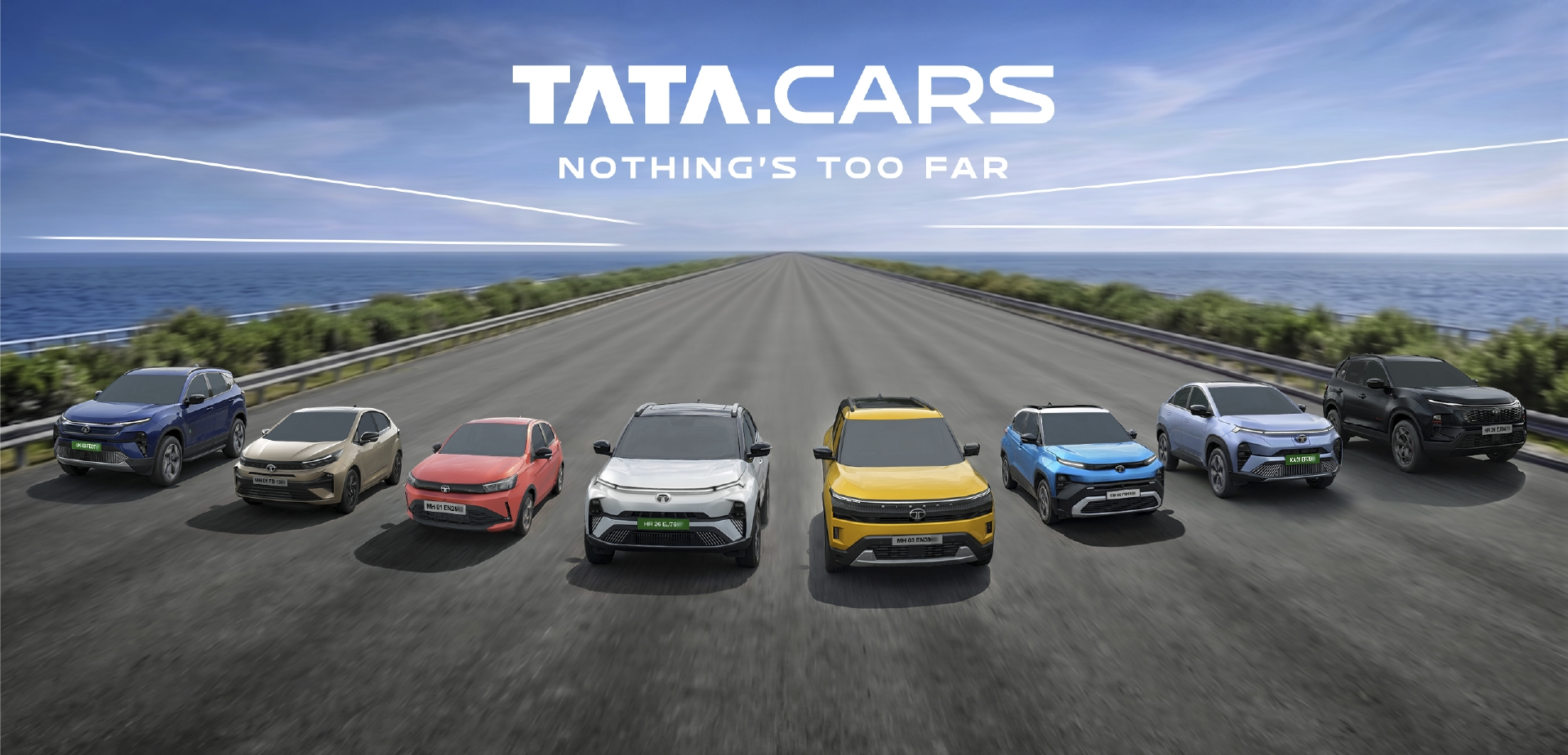
Tata.ev has expanded its Battery-as-a-Service (BaaS) option to its entire electric car range in India. The programme was initially available on the Tiago.ev and Punch.ev. It now also covers the Nexon.ev, Curvv.ev, Sierra.ev and Harrier.ev.
The BaaS option separates the cost of the battery from the upfront price of the car. This lowers the initial vehicle purchase price, while the battery is financed separately.
For buyers, this means a Tata EV can now be purchased either with the battery included in the vehicle price or through the BaaS model. The latter reduces the upfront cost but adds a separate battery payment based on usage and financing terms.
What Is Tata EV Battery-as-a-Service?
Battery-as-a-Service is a financing model in which the cost of the EV battery is separated from the vehicle purchase.
Under a conventional purchase, the battery is included in the price of the car. Under Tata’s BaaS model, the vehicle and battery are financed separately through independent loan accounts.
This brings down the upfront price of the vehicle. The battery payment is handled separately, with the amount depending on factors such as the battery size, down payment and loan tenure.
Tata has partnered with multiple financiers for the BaaS programme, giving buyers financing options for the vehicle and battery separately.
The important point is that BaaS does not remove the cost of the battery. It changes how that cost is paid.
Which Tata EVs Get BaaS?
With the latest expansion, all six Tata.ev passenger electric cars are available with the BaaS option.
The announced starting prices and battery usage costs are as follows:
| Tata EV | Battery | Starting price with BaaS* | Battery cost |
| Tiago.ev | 19 kWh | ₹4.69 lakh | ₹2.60/km |
| Punch.ev | 30 kWh | ₹6.59 lakh | ₹2.60/km |
| Nexon.ev | 45 kWh | ₹8.99 lakh | ₹4.40/km |
| Curvv.ev | 55 kWh | ₹10.99 lakh | ₹5.00/km |
| Sierra.ev | 63 kWh | ₹11.99 lakh | ₹5.50/km |
| Harrier.ev | 65 kWh | ₹14.49 lakh | ₹5.90/km |
These are the announced starting vehicle prices for the entry-level versions of the respective models under BaaS. The quoted battery costs are based on Tata’s specified usage assumptions and exclude charging costs. The Tiago.ev calculation uses an estimated 44 km of daily running, while the other models use an estimated 60 km per day.
The BaaS option reduces the initial vehicle price by between ₹2.30 lakh and ₹7.30 lakh compared with the corresponding starting prices with the battery included. However, that difference should not be treated as a saving on the total cost of the car because the battery is being financed separately.
Tata EV BaaS Prices Explained
The headline prices make the BaaS option look considerably cheaper than the standard purchase price.
For example, the Harrier.ev starts at ₹21.79 lakh with its battery included, while its BaaS vehicle price starts at ₹14.49 lakh. That is a ₹7.30 lakh reduction in the upfront vehicle price.
However, the battery has a separate cost of ₹5.90 per kilometre under the announced BaaS calculation.
Similarly, the Nexon.ev starts at ₹14.34 lakh with the battery included and ₹8.99 lakh under BaaS. The difference is ₹5.35 lakh, but the battery usage cost is separately listed at ₹4.40 per kilometre.
This distinction is important when comparing the two purchase methods.
BaaS lowers the upfront price. It does not make the battery free.
How Does the Tata BaaS Payment Work?
Tata describes BaaS as a dual-loan financing structure.
Instead of financing the entire EV as one purchase, the vehicle and battery are financed separately. Each can have its own loan account and tenure.
The battery EMI can vary depending on:
- Battery capacity
- Down payment
- Loan tenure
- Financing terms offered by the financier
The announced per-kilometre figures provide an indication of the battery financing or usage cost for each model. The final amount for an individual buyer can therefore differ from the headline figure.
What Does the Per-Kilometre Battery Cost Mean?
The per-kilometre figure is easier to understand with an example.
Suppose you choose a Nexon.ev under BaaS and drive 1,000 km in a month.
At the announced battery cost of ₹4.40 per kilometre:
1,000 km × ₹4.40 = ₹4,400
So, ₹4,400 would be the battery-related cost at that usage level based on the quoted BaaS rate.
But this is not the complete running cost of the EV.
You would still need to pay for electricity used to charge the car. Normal ownership expenses such as insurance, maintenance and repairs also remain separate. Tata’s announced BaaS figures do not include charging costs.
The same calculation can be used for the other models.
For example, 1,000 km of usage would correspond to:
- Tiago.ev: ₹2,600
- Punch.ev: ₹2,600
- Nexon.ev: ₹4,400
- Curvv.ev: ₹5,000
- Sierra.ev: ₹5,500
- Harrier.ev: ₹5,900
These are simple calculations using the announced per-kilometre figures and should not be confused with a final monthly EMI quote.
Tata EV BaaS vs Buying the Battery Upfront
The main difference between the two options is how the battery cost is financed.
| Battery included | BaaS | |
| Upfront vehicle price | Higher | Lower |
| Battery | Included in vehicle price | Financed separately |
| Vehicle finance | Standard vehicle finance | Separate vehicle finance |
| Battery payment | Included in vehicle finance | Separate battery payment |
| Charging | Extra | Extra |
| Maintenance | Extra | Extra |
| Repairs | Extra | Extra |
With the standard purchase option, the buyer pays for or finances the complete vehicle including its battery.
With BaaS, the battery cost is separated from the vehicle price. This reduces the initial vehicle acquisition cost but introduces a separate battery payment.
How Much Can the Upfront Price Fall With BaaS?
The difference varies considerably across the range.
Based on the announced starting prices, the reduction in upfront vehicle price is:
| Model | Starting price with battery | BaaS vehicle price | Upfront difference |
| Tiago.ev | ₹6.99 lakh | ₹4.69 lakh | ₹2.30 lakh |
| Punch.ev | ₹9.79 lakh | ₹6.59 lakh | ₹3.20 lakh |
| Nexon.ev | ₹14.34 lakh | ₹8.99 lakh | ₹5.35 lakh |
| Curvv.ev | ₹17.19 lakh | ₹10.99 lakh | ₹6.20 lakh |
| Sierra.ev | ₹18.79 lakh | ₹11.99 lakh | ₹6.80 lakh |
| Harrier.ev | ₹21.79 lakh | ₹14.49 lakh | ₹7.30 lakh |
These are starting prices for the entry-level versions and are intended to illustrate the difference in initial vehicle cost. They should not be interpreted as the total savings from choosing BaaS because the battery is financed separately.
What Is Not Included in the BaaS Cost?
The battery-related payment does not cover all the costs of running an electric car.
Buyers should separately account for:
- Electricity used for charging
- Insurance
- Maintenance
- Vehicle repairs
- Road tax and other applicable statutory charges
- Other ownership costs
Tata’s quoted BaaS prices also exclude charging costs and certain statutory charges from the displayed vehicle price.
This is why the BaaS starting price should not be directly compared with the amount you would pay to put the car on the road.
Is Tata BaaS Available on All Variants?
The announced headline BaaS prices are for the entry-level versions of the respective Tata EVs.
That means the ₹4.69 lakh Tiago.ev, ₹6.59 lakh Punch.ev, ₹8.99 lakh Nexon.ev and other prices in the table should be treated as starting BaaS vehicle prices, rather than prices applicable to every variant.
The exact price and financing terms will depend on the model and variant selected, along with the financing arrangement offered to the buyer.
Who Should Consider Tata EV BaaS?
BaaS gives buyers another way to finance an electric car. It may be relevant to people who want to reduce the initial amount required to purchase an EV.
It can also make it easier to compare different financing structures based on expected usage.
However, buyers should look beyond the headline starting price. A person who drives long distances every month will accumulate a higher battery-related cost than someone who drives relatively little.
The right comparison is therefore between the overall cost of ownership under both financing options, rather than simply comparing the two starting prices.
Things to Check Before Choosing Tata BaaS
Before signing up for the BaaS option, check the complete quotation from the dealer and financier.
In particular, look at:
- The exact variant price under BaaS.
- The vehicle loan amount and interest rate.
- The separate battery financing terms.
- The battery EMI or applicable per-kilometre charge.
- The down payment required for both components.
- The loan tenure for the vehicle and battery.
- The expected annual running of the car.
- Charging costs based on your normal usage.
- Insurance, road tax and other on-road costs.
- The terms and conditions of the BaaS agreement.
Tata has stated that BaaS is intended for personal use, with commercial use excluded from the offering.
Bottom Line
Tata.ev’s expansion of Battery-as-a-Service gives buyers a new way to finance its electric cars. The option is now available across the Tiago.ev, Punch.ev, Nexon.ev, Curvv.ev, Sierra.ev and Harrier.ev.
The biggest attraction is the lower upfront vehicle price. Depending on the model, the starting BaaS vehicle price is between ₹2.30 lakh and ₹7.30 lakh lower than the corresponding starting price with the battery included.
But the lower headline price should not be confused with a lower total ownership cost. The battery is simply being financed separately, with Tata quoting a per-kilometre battery cost ranging from ₹2.60 to ₹5.90 for the models covered by the announcement.
For buyers, the useful comparison is therefore not “BaaS price vs regular price”, but “total cost with BaaS vs total cost when the battery is included” over the period they expect to own and drive the EV.
Tata EV Battery-as-a-Service: FAQs
What is Tata EV Battery-as-a-Service?
Tata EV Battery-as-a-Service is a financing option that separates the cost of the battery from the vehicle purchase. The car and battery are financed separately, reducing the upfront vehicle price.
Which Tata EVs are available with BaaS?
The BaaS option is now available across Tata.ev’s complete electric car range: Tiago.ev, Punch.ev, Nexon.ev, Curvv.ev, Sierra.ev and Harrier.ev.
What is the cheapest Tata EV under BaaS?
The Tiago.ev has the lowest announced BaaS starting price at ₹4.69 lakh. Its quoted battery cost starts at ₹2.60 per kilometre under the announced usage assumptions.
What is the Tata Harrier.ev BaaS price?
The Harrier.ev starts at ₹14.49 lakh under the BaaS vehicle pricing structure. The announced battery financing or usage cost is ₹5.90 per kilometre. These figures apply to the entry-level version and exclude charging and other applicable costs.
Is charging included in Tata BaaS?
No. Charging costs are separate from the quoted BaaS battery cost. Buyers need to account for the electricity used to charge the vehicle in addition to the battery-related payment.
Does BaaS make the Tata EV cheaper overall?
Not necessarily. BaaS reduces the upfront vehicle price by separating the battery cost, but the battery still has to be paid for separately. The overall cost will depend on the vehicle price, battery financing terms, usage, charging costs and other ownership expenses.