Traction Control Explained: How It Helps on Wet Roads
Published on 31 August 2026
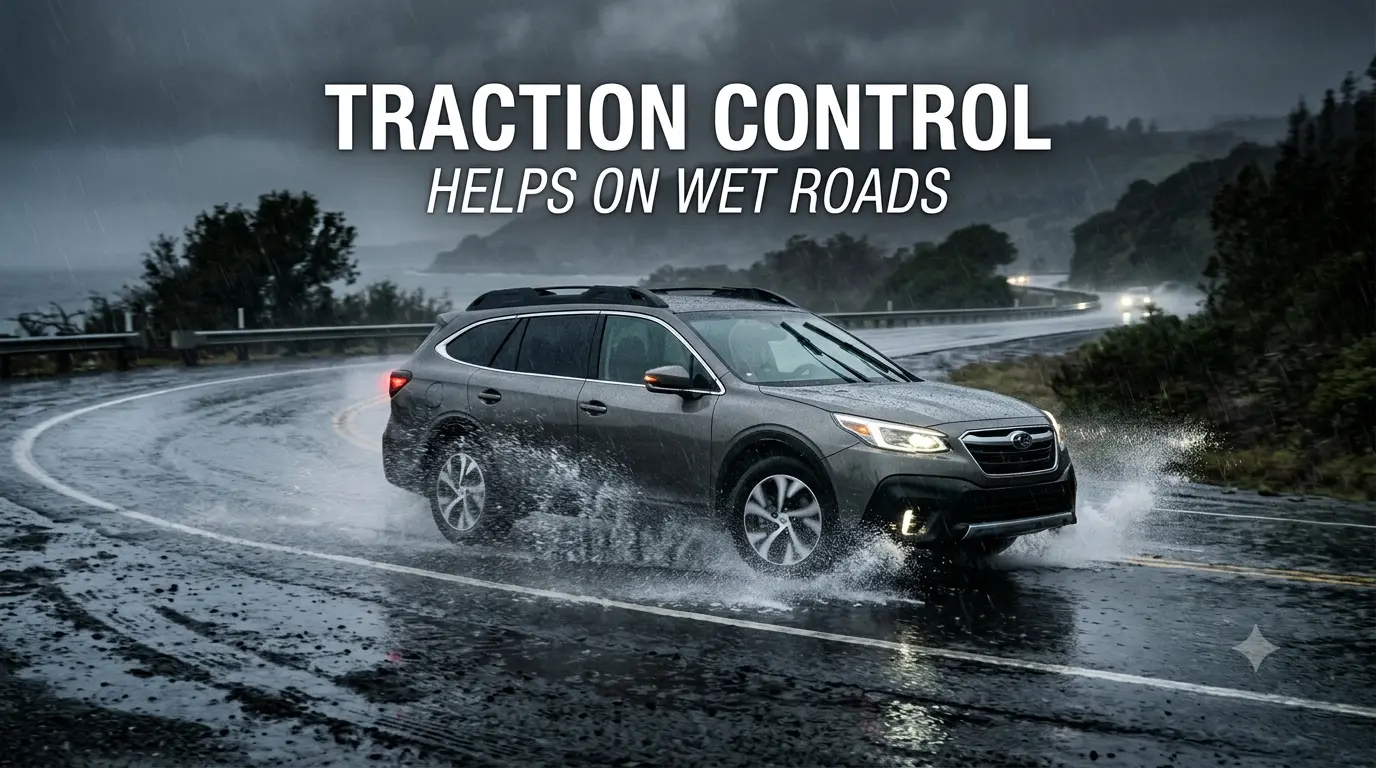
Traction control, or TCS, helps prevent the driven wheels from spinning when they lose grip during acceleration. This can be particularly useful on wet roads, where water can reduce the amount of grip available between the tyres and the road. When the system detects excessive wheel slip, it can reduce engine torque, apply the brakes to a spinning wheel, or use both methods to help the tyres regain traction.
You may not notice traction control working during everyday driving. It usually steps in when you need it most, such as when pulling away quickly on a wet road or driving over a slippery patch.
What Is Traction Control?
Traction control is an electronic safety system that helps your car maintain grip when the driven wheels start spinning.
Every time you accelerate, the engine sends torque to the driven wheels. If the tyres have enough grip, that power is used to move the car forward. But if the road is slippery or you press the accelerator too hard, a tyre can start spinning instead of gripping the surface properly.
This is where TCS steps in.
The system monitors wheel speeds and looks for signs that one or more driven wheels are spinning faster than they should. When it detects excessive wheel slip, it can intervene automatically. Depending on the car, it may reduce engine torque, apply braking force to the spinning wheel, or use both.
Traction control is closely linked to other electronic safety systems in modern cars. It commonly works alongside ABS and Electronic Stability Control (ESC), with the different systems using information from wheel-speed sensors and other vehicle sensors.
How Does Traction Control Work?
The basic idea behind TCS is fairly simple.
Your car has wheel-speed sensors that constantly monitor how fast the wheels are turning. If a driven wheel suddenly starts rotating much faster than expected, the electronic control unit can recognise that the tyre may have lost traction.
The system then responds automatically.
It monitors wheel speed
The wheel-speed sensors keep checking the rotation of each wheel. A sudden difference in speed can indicate that a driven wheel is spinning.
It reduces engine torque
If the system detects excessive wheel spin, it can reduce the amount of torque being produced by the engine. This gives the tyre a better chance of regaining grip.
It can apply the brakes
Some systems can also apply the brakes to a spinning driven wheel. On cars with an open differential, this can help send more useful torque to the other driven wheel that still has grip.
It works automatically
The driver does not normally need to do anything. TCS can intervene in a fraction of a second when it detects wheel slip.
You may notice the engine briefly feels less responsive or see a traction-control symbol flashing on the instrument cluster. That usually means the system has detected wheel spin and is working to control it.
The exact way the system operates varies between manufacturers and models, but the purpose remains the same: reduce unnecessary wheel spin and help the tyres maintain traction.
Why Is Traction Control Useful on Wet Roads?
This is where TCS becomes particularly useful for drivers in India.
Rain can make roads considerably more slippery. Water reduces the grip available between the tyre and road surface, while oil, mud, dust and other material can make things worse. This is especially noticeable during the monsoon, when roads can change from dry to slippery within seconds.
Imagine pulling away from a traffic signal after a heavy shower. You press the accelerator a little harder than usual and one of the driven tyres starts spinning. Without TCS, the wheel could continue spinning until you ease off the accelerator yourself.
With traction control, the car can detect the wheel slip and intervene automatically.
There are several other situations where this can help.
Pulling away on a wet road
A wet road can make it easier for the driven wheels to lose grip when you accelerate from a standstill. TCS can reduce wheel spin and help the car move forward more smoothly.
Accelerating on a wet corner
Turning and accelerating at the same time places additional demands on the tyres. If you apply too much power, a driven wheel can lose grip. TCS can reduce torque when it detects excessive wheel spin.
However, it is important to remember that traction control does not make it safe to accelerate hard through a wet corner. The system is there to assist the driver, not to overcome the limits of tyre grip.
Driving over muddy or loose patches
Indian roads can have patches of mud, sand, gravel and other loose material, particularly during the rainy season or around road construction. A driven wheel can spin when it moves from a grippy surface to one with less traction. TCS can detect the change and intervene.
Uneven grip between driven wheels
You may also come across a road where one driven wheel is on a slippery patch while the other is on a surface with better grip. The wheel with less grip can begin spinning faster. TCS can detect the difference and reduce the slip.
Traction Control vs ABS vs ESC
These three systems are often mentioned together, but they do different jobs.
| Feature | What it does | Main situation |
| ABS | Helps prevent the wheels from locking during braking | Hard braking |
| Traction Control (TCS) | Helps reduce excessive wheel spin from the driven wheels | Acceleration |
| ESC | Helps keep the vehicle on the driver’s intended path when it starts to lose stability | Skids and sudden manoeuvres |
A simple way to remember it is that ABS is mainly for braking, TCS is mainly for acceleration, and ESC deals with overall vehicle stability.
The systems can work together. For example, if you are driving on a wet road and suddenly have to brake and steer around an obstacle, ABS can help you maintain braking control while ESC can help manage the vehicle’s stability.
What Are the Benefits of Traction Control?
TCS is not just useful during heavy rain. It can help in several everyday driving situations.
Better control during acceleration
If a driven wheel starts spinning, TCS can reduce the amount of slip. This can make acceleration more controlled, particularly on slippery surfaces.
Added support in rainy weather
Wet roads are one of the most common situations where drivers may notice TCS working. The system can help when the tyres struggle to find enough grip.
Useful on loose surfaces
Mud, gravel and sand can cause wheel spin. TCS can reduce excessive slip, although some vehicles allow the system to be reduced or switched off when controlled wheel spin is useful for getting through particularly loose terrain.
Works without driver input
One of the biggest advantages is that the system works in the background. You do not have to react to every small change in grip yourself.
Is Traction Control Important for Indian Roads?
Indian drivers deal with a wide variety of road surfaces. A daily commute might include smooth tarmac, potholes, painted road markings, loose gravel, muddy patches and waterlogged sections within the same journey.
Monsoon conditions can make this even more challenging.
Traction control can be useful when accelerating over slippery patches because it helps prevent the driven wheels from spinning unnecessarily. It can also provide some extra assistance when road grip changes suddenly.
However, TCS should not be treated as a replacement for careful driving.
If there is standing water on the road, for example, the safest response is to reduce speed and avoid sudden steering or acceleration. Traction control cannot prevent aquaplaning when the tyres lose contact with the road surface.
Good tyres are equally important. Worn tread, incorrect tyre pressure and poor tyre condition can all affect how much grip your car has, regardless of how many electronic safety systems it uses.
Can You Turn Traction Control Off?
Some cars allow the driver to switch off or reduce traction-control intervention. This can be useful in certain situations, such as driving through deep mud or loose sand, where a controlled amount of wheel spin may help the vehicle move.
The way this works varies between cars. Some systems may reduce traction-control intervention without completely disabling all stability functions.
For normal driving, particularly on wet roads, it is generally best to leave TCS switched on. If you are unsure about what happens when you press the TCS button in your car, check the owner’s manual.
Cars in India With Traction Control
Traction control has become increasingly common in cars sold in India. You can now find it across different segments, although availability can still depend on the model and variant.
Hyundai’s current range, for example, includes several cars with traction-control or related stability systems. Its current information on TCS highlights models including the Grand i10 Nios, i20, i20 N Line, Aura, Exter, Venue, Verna, Creta and Alcazar.
Other manufacturers also offer traction control on a growing number of hatchbacks, sedans and SUVs.
If TCS is important to you, do not rely only on the model name. Check the latest brochure for the exact variant because safety equipment can differ between trims and may change with a model update.
Does Traction Control Make Driving in the Rain Safe?
Not by itself.
This is probably the most important thing to understand about TCS. It can help manage wheel spin, but it cannot increase the physical grip available between your tyres and the road.
If you drive too fast on a flooded road, accelerate aggressively through a corner or have badly worn tyres, traction control cannot completely protect you from losing control.
It is better to think of TCS as an additional safety net.
Good driving habits still matter. Reduce your speed when roads are wet, leave more space between your car and the vehicle ahead, avoid sudden inputs and make sure your tyres are in good condition.
Conclusion
Traction control is a safety feature that most drivers rarely think about. That is actually part of its appeal. It monitors the wheels in the background and steps in when it detects excessive wheel spin.
On a wet road, this can be particularly helpful. Whether you are pulling away from a signal, accelerating after a turn or crossing a slippery patch, TCS can reduce wheel spin and help the tyres find grip again.
It is not a substitute for good tyres or sensible driving, and it cannot make a flooded road safe. But when combined with ABS, ESC and other safety features, traction control gives the driver another useful layer of protection.
For anyone who regularly drives during India’s monsoon season, it is a feature worth having.
FAQs
Does traction control work in the rain?
Yes. Rain can reduce available tyre grip and make wheel spin more likely during acceleration. TCS detects excessive wheel slip and can reduce engine torque or apply braking to a spinning driven wheel to help restore traction.
Is traction control the same as ABS?
No. ABS is designed to help prevent wheel lock during braking, while traction control helps reduce wheel spin during acceleration. Both systems can work together.
Is traction control the same as ESC?
No. TCS mainly deals with wheel spin during acceleration. ESC has a wider role and helps keep the vehicle stable when it begins to deviate from the driver’s intended path.
Can traction control prevent skidding on a wet road?
Not completely. TCS can help reduce wheel spin, but it cannot overcome the physical limits of tyre grip. It also cannot prevent every type of skid or stop aquaplaning caused by standing water.
Should I turn traction control off in the rain?
For normal road driving, there is usually no reason to turn it off. Keeping TCS active gives the car an additional way to manage wheel spin when the road is slippery.
Do all cars in India have traction control?
No. Traction control is not fitted to every car sold in India. Its availability depends on the model and variant, although the feature has become much more common across different vehicle segments.