Bharat NCAP 2.0 Explained: What’s Changing?
Published on 9 September 2026

Bharat NCAP has given Indian car buyers a much clearer way to compare vehicle safety. Instead of relying only on the safety equipment listed in a brochure, buyers can now look at independently assessed crash-test results and star ratings.
But the system is about to become considerably more comprehensive.
Bharat NCAP 2.0 is scheduled to come into effect from October 2027, with the government planning to assess a much wider part of the vehicle safety chain. The new framework is expected to look beyond what happens when a crash occurs and give greater importance to preventing crashes, protecting pedestrians and two-wheeler users, and improving post-crash safety.
The detailed framework comes from the proposed revision to AIS-197, which sets out a 100-point assessment spread across five safety areas. Because the technical framework originated as a draft, some provisions can still change before implementation.
For car buyers, however, the direction is clear: a five-star rating under Bharat NCAP 2.0 is expected to require a much broader level of safety performance than simply having more airbags.
What Is Bharat NCAP?
Bharat NCAP, or Bharat New Car Assessment Programme, is India’s vehicle safety assessment programme. It was introduced to give consumers more information about how cars perform in controlled crash tests and to encourage manufacturers to improve vehicle safety.
The programme is voluntary and operates above the basic regulatory requirements for vehicles. It assesses eligible passenger cars using standardised tests and awards an overall star rating based on their performance.
The current system considers areas including adult occupant protection, child occupant protection and safety-assist technologies.
This has already changed the way many Indian buyers look at cars. A vehicle’s airbag count is no longer the only safety-related number that gets attention. Crash-test performance, ESC, seat-belt reminders, ISOFIX mounts and other safety features have become important parts of the buying decision.
What Is Bharat NCAP 2.0?
Bharat NCAP 2.0 is the next phase of India’s vehicle safety assessment programme.
The government has announced that it will be rolled out from October 2027. According to Road Transport and Highways Minister Nitin Gadkari, the programme will assess the entire vehicle safety chain, rather than focusing primarily on crash protection.
The proposed framework moves to a 100-point system divided into five broad areas:
| Safety area | Proposed weightage |
| Crash Protection | 55 points |
| Vulnerable Road User Protection | 20 points |
| Safe Driving | 10 points |
| Accident Avoidance | 10 points |
| Post-Crash Safety | 5 points |
| Total | 100 points |
These weightings are based on the proposed AIS-197 Revision 1 framework.
The change is significant because crash protection remains the biggest component, but it will no longer represent the entire picture of vehicle safety.
Why Is Bharat NCAP 2.0 Being Introduced?
A crash test can tell us a great deal about how well a vehicle protects its occupants when a collision occurs. But vehicle safety starts before the impact.
A car can potentially help avoid a collision using technologies such as autonomous emergency braking. Its design can also reduce the severity of injuries to pedestrians or motorcyclists. And after a crash, the ability of occupants to get out of the vehicle safely can also matter.
Bharat NCAP 2.0 is designed around this broader approach.
In simple terms, the programme is moving from:
“How well does this car protect its occupants in a crash?”
towards:
“How well does this vehicle help prevent crashes, protect people when a crash happens and deal with the aftermath?”
That is arguably the biggest change buyers need to understand.
The Five Safety Pillars of Bharat NCAP 2.0
1. Crash Protection: 55 Points
Crash protection will remain the most heavily weighted part of Bharat NCAP 2.0, accounting for 55 out of 100 points.
This is important because the new programme is not moving away from traditional crash testing. Instead, the proposed framework expands it.
The revised system is expected to use five major crash tests:
- Offset frontal impact
- Full-width frontal impact
- Mobile deformable barrier side impact
- Oblique pole impact
- Rear impact
The additional full-width frontal and rear-impact tests are intended to provide a broader assessment of how a vehicle performs in different types of collisions.
Why Do More Crash Tests Matter?
No single crash test can reproduce every accident.
A frontal offset crash tests a different part of a vehicle’s structure from a full-width frontal impact. A side crash presents different challenges again, while a rear impact can involve different occupant and vehicle responses.
By increasing the number of crash scenarios, Bharat NCAP 2.0 aims to give buyers a more complete picture of a vehicle’s crashworthiness.
The proposed framework includes a 64 km/h offset frontal test, a 50 km/h full-width frontal test, a 50 km/h mobile deformable barrier side-impact test, a 32 km/h oblique pole test and a 50 km/h rear-impact test.
For consumers, the important takeaway is simple: a car will have to demonstrate good performance across a wider range of crash scenarios.
2. Vulnerable Road User Protection: 20 Points
One of the most notable changes is the amount of importance given to people outside the car.
Vulnerable Road User Protection accounts for 20 points, making it the second-largest component of the proposed rating system.
Vulnerable road users can include:
- Pedestrians
- Cyclists
- Motorcyclists
- Other people exposed to traffic without the protection of a vehicle’s passenger compartment
The proposed framework includes pedestrian-impact assessments covering areas such as the lower leg and head, along with assessments related to active safety systems.
This is particularly relevant to India, where cars share roads with large numbers of motorcycles, scooters, pedestrians and other road users.
Why Does This Matter?
Traditional crash tests mainly concentrate on what happens to people inside the vehicle.
Bharat NCAP 2.0 expands that perspective.
A car’s bonnet, bumper and front-end design can influence the severity of injuries suffered by a pedestrian in a collision. Active safety systems can also potentially help prevent or reduce the severity of a collision in the first place.
This means manufacturers will have to consider people outside the car more explicitly when developing vehicles for the Indian market.
3. Safe Driving: 10 Points
The third pillar is Safe Driving, which carries 10 points.
This area brings greater attention to technologies that can assist the driver and help reduce the likelihood of a crash.
Depending on the final implementation of the framework, the assessment can include technologies such as:
- Lane-departure warnings
- Forward-collision warnings
- Blind-spot monitoring
- Driver-monitoring systems
- Other driver-assistance technologies covered by the assessment protocol
It is important not to treat all these systems as interchangeable.
For example, a forward-collision warning can alert a driver to a potential crash, while autonomous emergency braking can intervene by applying the brakes when the system determines that a collision is imminent.
That distinction becomes increasingly important as more Indian cars get ADAS.
Does Bharat NCAP 2.0 Make ADAS Mandatory?
This is an area where buyers should be careful with headlines.
The proposed framework gives active safety and accident-avoidance technologies a much greater role, but that does not mean every ADAS feature will automatically become mandatory on every car.
The draft framework distinguishes between technologies that contribute to the assessment and requirements for a vehicle to qualify for a rating.
For example, ESC is treated as a qualifying safety technology, while autonomous emergency braking is proposed as a technology that can contribute to the score but is not simply mandatory on every rated vehicle.
The final notified rules will be important here.
4. Accident Avoidance: 10 Points
The fourth pillar is Accident Avoidance, worth 10 points.
This is another major shift in the philosophy behind Bharat NCAP.
Traditional crash tests are largely about what happens after a collision has occurred. Accident-avoidance systems try to prevent the collision from happening in the first place.
Two technologies are particularly important here:
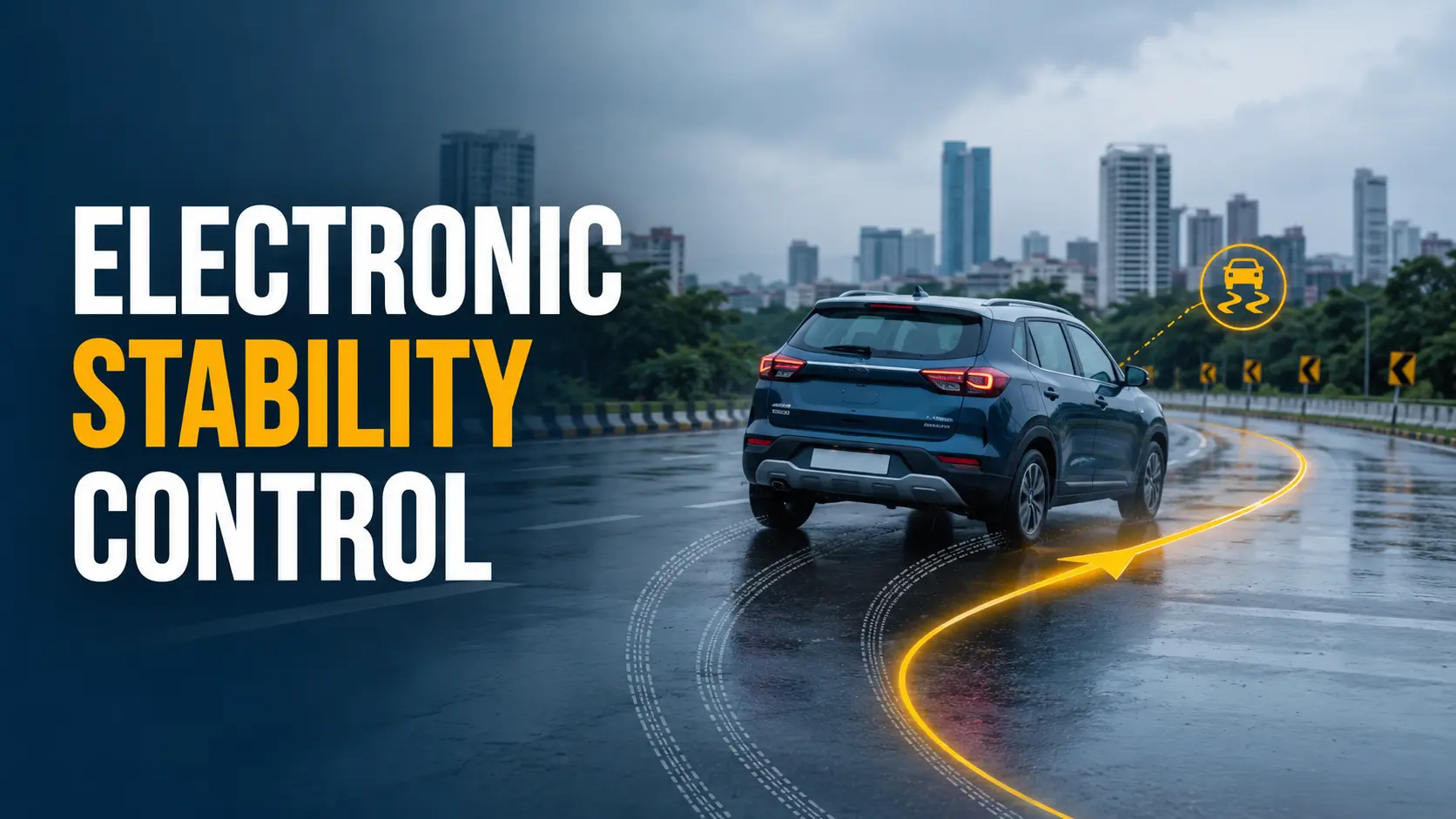
Electronic Stability Control
ESC helps a driver maintain control when the vehicle starts to lose stability.
It can be particularly useful during sudden steering manoeuvres or situations where the vehicle begins to deviate from the driver’s intended path.
Autonomous Emergency Braking
Autonomous Emergency Braking, or AEB, can detect certain potential collisions and automatically apply the brakes when the system determines that intervention is necessary.
The effectiveness of AEB depends on the technology, conditions and type of obstacle involved. It should therefore be viewed as a driver-assistance system, not a replacement for attentive driving.
The proposed Bharat NCAP 2.0 framework gives accident-avoidance technologies a dedicated place in the overall score.
5. Post-Crash Safety: 5 Points
The final pillar is Post-Crash Safety, which accounts for five points.
This may receive less attention than the crash tests, but it represents an important change in how vehicle safety is viewed.
Safety does not necessarily end when the vehicle stops moving.
After a serious collision, occupants may need to get out of the vehicle quickly. Emergency responders may also need access to the passenger compartment.
The proposed framework therefore considers aspects of what happens after a crash, including issues related to evacuation and post-crash safety.
This follows the government’s broader description of Bharat NCAP 2.0 as an assessment of the entire vehicle safety chain, including what happens after a collision.
Will It Be Harder to Get a Five-Star Rating?
Yes, if the proposed framework is implemented as drafted.
The proposed system introduces a 100-point scale and progressively raises the score needed for a five-star rating.
Under the draft:
- 70 points out of 100 would be required for five stars during the 2027–2029 period.
- The threshold would increase to 80 points from 2029 to 2031.
The draft also proposes that a five-star vehicle cannot have a zero score in any assessment vertical.
That means a manufacturer cannot simply maximise performance in crash protection while completely ignoring another part of the safety assessment.
However, these figures should currently be treated as proposed framework provisions, rather than assuming every technical detail is permanently fixed.
Bharat NCAP vs Bharat NCAP 2.0
The easiest way to understand the change is to compare the two approaches.
| Current Bharat NCAP | Bharat NCAP 2.0 | |
| Overall approach | Crash protection and safety-assist assessment | Wider vehicle safety-chain assessment |
| Scoring | Existing AOP/COP/SAT framework | Proposed 100-point framework |
| Crash testing | Existing test programme | Five proposed major crash tests |
| Crash protection | Major focus | 55% |
| Vulnerable road users | More limited role | Dedicated 20% pillar |
| Safe driving | Included within current framework | Dedicated 10% pillar |
| Accident avoidance | Safety-assist assessment | Dedicated 10% pillar |
| Post-crash safety | Not a major separate pillar | Dedicated 5% pillar |
| Five-star threshold | Current methodology | Proposed 70/100, rising to 80/100 |
The current Bharat NCAP programme remains a voluntary safety assessment above the regulatory requirements, while the revised framework is intended to become applicable from October 2027.
Will Existing Five-Star Cars Remain Five-Star Cars?
This is an important question for buyers looking at cars before and after the transition.
A five-star rating awarded under the current Bharat NCAP methodology should not be interpreted as if it was obtained under Bharat NCAP 2.0.
The two systems use different assessment frameworks, and Bharat NCAP 2.0 is intended to test a broader range of safety performance.
In other words, a five-star car under the current system and a five-star car under the new system will both have earned the top rating, but the underlying assessment will not be identical.
This will be particularly important for used-car buyers in the future. When comparing two cars, it will be worth checking when they were tested and under which Bharat NCAP protocol.
Will Six Airbags Still Be Enough?
No.
Six airbags remain an important safety feature, but Bharat NCAP 2.0 highlights why airbag count should not be used as a shortcut for judging overall vehicle safety.
Front, side and curtain airbags provide different forms of protection. They are designed to work with the vehicle’s seat belts and other restraint systems.
But a vehicle’s overall safety also depends on:
- Crash performance
- Passenger-compartment integrity
- ESC
- Seat-belt systems
- Child protection
- Pedestrian protection
- Accident-avoidance technologies
- Other driver-assistance systems
Bharat NCAP 2.0 takes this broader approach even further.
A buyer should therefore ask “How safe is this car overall?” rather than simply “How many airbags does it have?”
What Bharat NCAP 2.0 Means for Car Buyers
For buyers, the new system could make safety comparisons more useful, but it may also require a little more attention to the details.
Here are some things worth checking when comparing cars.
Look Beyond the Star Rating
A five-star rating is useful, but the individual scores tell you more.
Two cars could receive the same overall star rating while having different strengths and weaknesses.
Check Which Variant Was Tested
Safety equipment can vary between variants.
A crash-test result applies to the vehicle configuration assessed under the programme, so buyers should check whether the variant they are considering has the same relevant safety equipment.
Check the Individual Safety Scores
Don’t stop at the headline number.
Look at adult occupant protection, child protection and the relevant active and passive safety assessments.
Under Bharat NCAP 2.0, the broader scoring system should make this even more important.
Check Standard Safety Equipment
Look for features such as:
- Six airbags
- ESC
- Seat-belt reminders
- Three-point seat belts
- ISOFIX mounts
- Curtain airbags
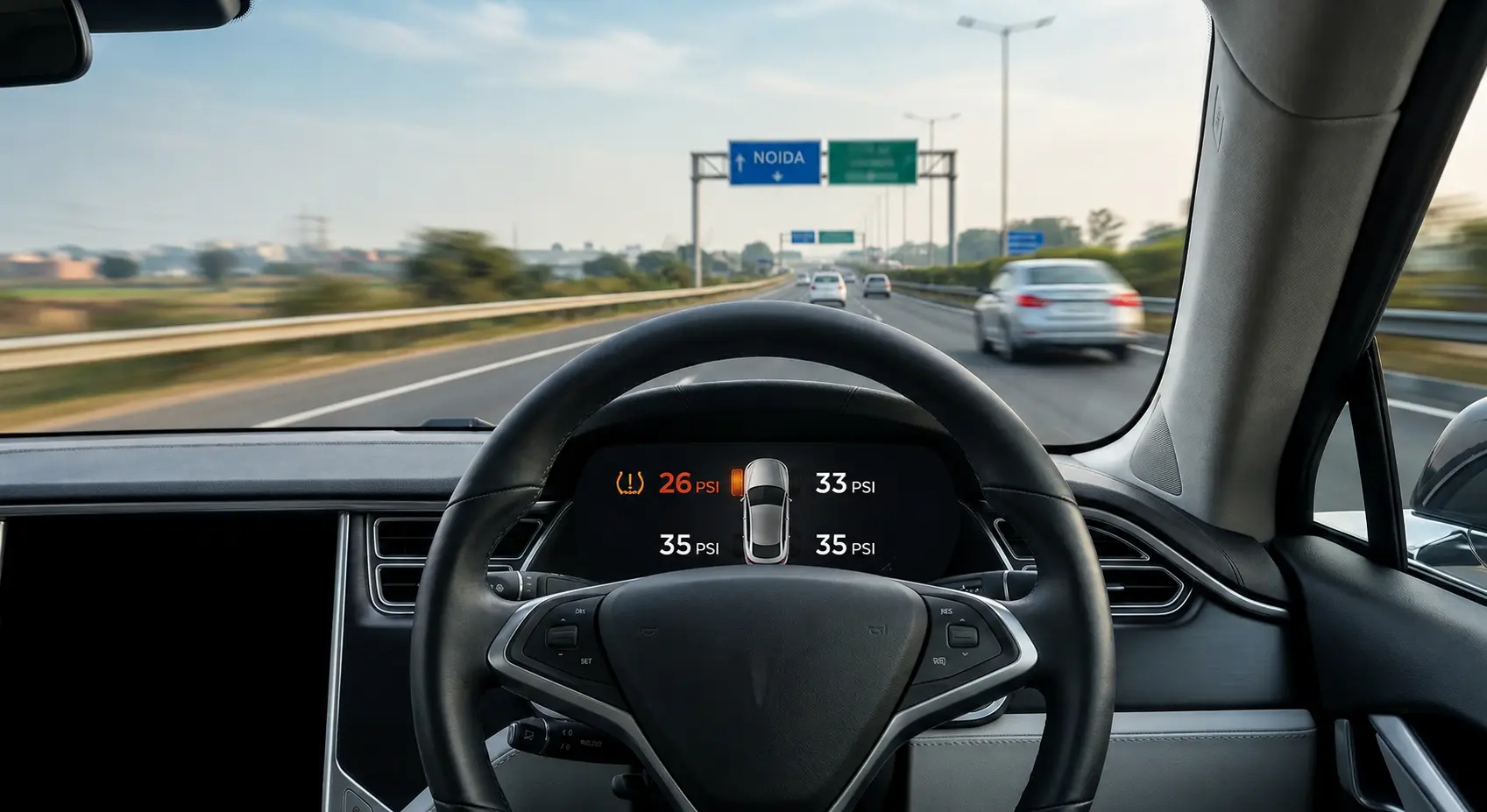
- Tyre-pressure monitoring
- ADAS features, where available
Consider Pedestrian and Two-Wheeler Safety
This will become more important under the new framework because vulnerable road-user protection receives a dedicated 20% weighting.
Don’t Assume More Technology Always Means More Safety
ADAS can be useful, but the performance of the vehicle’s underlying structure and restraint systems remains important.
A car should be considered as a complete safety package.
Will Bharat NCAP 2.0 Make Cars More Expensive?
It is too early to put a specific number on this.
More comprehensive safety assessments could encourage manufacturers to add or improve technologies, strengthen structures and improve pedestrian protection. Some of these changes can increase development and manufacturing costs.
However, that does not mean every car will necessarily become more expensive by a particular amount.
Competition between manufacturers, economies of scale and the way safety equipment is packaged into different variants will also influence the final price.
For buyers, the more important question is whether additional safety equipment provides meaningful protection and whether manufacturers make it available across a wider range of variants.
When Will Bharat NCAP 2.0 Start?
The government has announced October 2027 as the rollout date for Bharat NCAP 2.0. The current Bharat NCAP programme will therefore remain relevant until the transition to the revised framework.
The detailed technical provisions come from the revised AIS-197 framework proposed by the Ministry of Road Transport and Highways.
Because technical standards can be amended before their final implementation, buyers should treat the detailed scoring and testing provisions discussed in this article as the framework announced/proposed so far, rather than assuming that every technical detail is already immutable.
The Bottom Line
Bharat NCAP 2.0 is more than a tougher version of the existing crash-test programme.
The proposed framework changes the way vehicle safety is assessed by looking at the entire safety chain. Crash protection will remain the largest part of the score, but pedestrian and two-wheeler protection, accident avoidance, driver-assistance technologies and post-crash safety will receive much greater attention.
For Indian car buyers, this is a welcome development.
It also means that the old habit of judging a car’s safety by counting its airbags or looking only at its star rating will become less useful.
From October 2027, the more useful question will be:
How well does this car prevent crashes, protect people when a crash happens, and help occupants after the crash?
That is the broader idea behind Bharat NCAP 2.0.
Frequently Asked Questions
When will Bharat NCAP 2.0 start?
Bharat NCAP 2.0 is scheduled to come into effect from October 2027, according to the latest government announcement.
What are the five pillars of Bharat NCAP 2.0?
The proposed framework has five pillars: Crash Protection, Vulnerable Road User Protection, Safe Driving, Accident Avoidance and Post-Crash Safety.
How many points will Bharat NCAP 2.0 have?
The proposed system uses a 100-point scale, with 55 points for crash protection, 20 for vulnerable road-user protection, 10 for safe driving, 10 for accident avoidance and five for post-crash safety.
Will six airbags be enough to get five stars?
No. Six airbags are only one component of vehicle safety. The proposed Bharat NCAP 2.0 framework assesses a much wider range of safety performance.
Will ADAS become mandatory?
Not every ADAS feature is proposed to become mandatory on every vehicle. The framework gives greater importance to active safety and accident-avoidance technologies, but individual technologies have different roles in the assessment. The final implementation rules will determine the exact requirements.
Will current five-star Bharat NCAP cars become less safe?
No. A vehicle’s existing safety performance does not change simply because the testing protocol changes. However, a five-star rating under the current methodology should not be treated as directly equivalent to a five-star rating awarded under Bharat NCAP 2.0, because the assessment criteria will be broader.