CNG Kit Safety: Factory-Fitted vs Dealer-Fitted vs Aftermarket
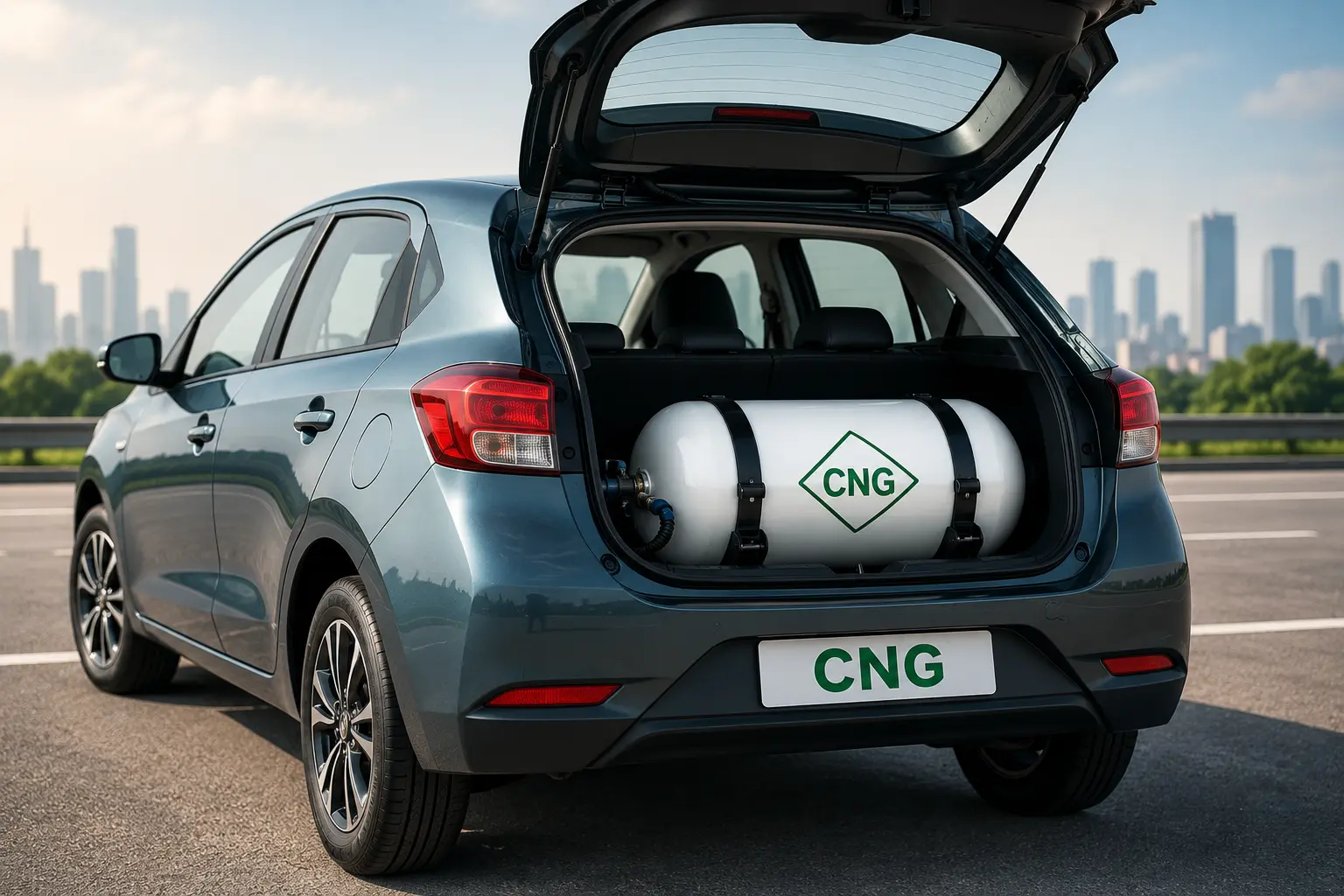
CNG cars are everywhere on Indian roads now. With petrol remaining significantly more expensive than CNG across most Indian cities, many high-mileage drivers are considering the switch. But before you convert your car or buy a CNG variant, one question matters more than mileage: is the kit safe?
There are actually three ways to get a CNG car in India, not two, and the safety gap between them is real: a factory-fitted CNG variant straight from the showroom, a CNG kit fitted through an authorised dealership, or an independent aftermarket kit on your existing petrol car. Here is an honest, ground-up look at all three.
Factory-Fitted CNG Kit: Why It Is the Safest
A factory-fitted CNG car is built with CNG in mind from the assembly line itself, not adapted afterwards. Maruti Suzuki’s S-CNG system illustrates the advantages of factory integration. Features such as stainless-steel fuel lines, dedicated wiring, ECU calibration and safety interlocks are designed into the vehicle rather than added later.
Tata Motors also engineers its iCNG models differently from conventional retrofit systems, with features such as twin-cylinder packaging for better boot space and a leak-detection system that automatically cuts off the CNG supply if a leak is detected.
Almost every major carmaker now sells factory-fitted CNG variants:
- Maruti Suzuki offers S-CNG across Alto K10, WagonR, Swift, Dzire, Baleno, Fronx, Brezza and Ertiga.
- Tata Motors sells iCNG variants of the Tiago, Tigor, Altroz, Punch and Nexon, with twin-cylinder technology that saves boot space.
- Hyundai offers HY-CNG on the Grand i10 Nios, Aura and Exter.
- Toyota sells factory CNG on the Glanza, Rumion and Urban Cruiser Hyryder (badge-engineered Maruti models sharing the same S-CNG hardware).
The trade-off is cost and choice. Factory CNG variants typically cost Rs 80,000 to Rs 1.2 lakh more than the equivalent petrol version, and you are limited to whichever models and trims the manufacturer offers with CNG. There can also be a longer waiting period since these variants are in high demand.
Factory-fitted CNG cars must satisfy the same applicable crash safety and regulatory requirements as their petrol counterparts, with the CNG system designed and validated as part of the vehicle. Retrofit kits, by contrast, rely on approved installation practices rather than vehicle-level integration by the original manufacturer.
Dealer-Fitted CNG Kit: Is It as Safe as Factory CNG?
This is the option most buyers overlook. Some manufacturers, such as Honda (Amaze, Elevate), Citroen (C3) and Renault (Kiger), do not build CNG on the assembly line, but their authorised dealerships fit CNG kits before delivery using manufacturer-recommended brands, commonly Lovato, installed by trained technicians at the dealership itself.
This sits clearly between the other two options. Integration and safety are better than a random local mechanic doing the job, since the dealer network follows an approved installer and parts list. Many manufacturers continue to honour at least part of the vehicle warranty when the kit is installed through their authorised channel, although the exact coverage varies by brand and should always be confirmed in writing. However, it is still not as seamless as a factory build, and warranty on the CNG-specific parts can be conditional rather than complete.
Dealer-fitted kits usually cost Rs 60,000 to Rs 80,000, including fitment and paperwork. If your preferred model does not come with factory CNG, checking whether your dealership offers this option is worth it before going to an independent installer.
Dealer-fitted does not automatically mean manufacturer-engineered. Always ask who supplies the kit, who performs the installation, what warranty remains on the vehicle, and whether the kit is approved for your exact model and variant.
Also, availability varies by city and dealership, so buyers should confirm whether their local authorised dealer provides an approved retrofit package.
Aftermarket CNG Kit: Safe or Risky?
An aftermarket or retrofit kit is fitted independently, usually on an older car that never had a factory or dealer CNG option, such as an older Swift, WagonR, Amaze or i20. This is the cheapest route, generally Rs 40,000 to Rs 60,000 for a genuine sequential kit including installation, compared to dealer or factory options.
Among the best-known brands in India’s retrofit CNG market are Lovato, Landi Renzo, BRC, Zavoli and Mijo, while components from manufacturers such as Tomasetto Achille are also widely used in approved conversion systems.
Even with a genuine, certified kit, the outcome depends almost entirely on the individual mechanic’s skill. A poor installation can lead to engine knocking, misfires, fuel inefficiency, or worse. Unlike a factory or dealer fitment, there is no manufacturer standing behind the integration quality, only the certification of the components themselves. On top of that, fitting an aftermarket kit typically voids the remaining factory warranty, and you are personally responsible for getting the RC updated with the new fuel type. None of this means aftermarket kits are unsafe by definition, but the safety margin depends heavily on choosing the right installer, with far less room for error than a factory or dealer fitment gives you.
The Certification Standards That Actually Matter
Whichever route you choose, this is the part that matters most for dealer or aftermarket fitments. Every CNG kit sold or fitted in India must comply with AIS-028 (the Automotive Industry Standard for CNG vehicle systems), issued under Rule 115 and Rule 126 of the Central Motor Vehicle Rules. This covers cylinder material, pressure testing, valve design, pipe routing and crash safety. Most passenger cars sold in India use Type-1 steel cylinders that comply with the applicable BIS and automotive standards.
For a dealer or aftermarket fitment to be legal: the kit must have ARAI type-approval, verifiable against its paperwork; the fitment must be done at an RTO-authorised installer, not just any local mechanic; and the conversion must be endorsed on your RC within 14 days of installation, as required under Section 52 of the Motor Vehicles Act and AIS-024 installation procedures. An unendorsed conversion, even with a genuine kit, is technically illegal and can lead to a challan, and can also get an insurance claim denied if something goes wrong.
Inform your insurer immediately after the conversion. An undeclared fuel conversion may affect claim settlement, even if the installation itself is legal.
Factory-Fitted vs Dealer-Fitted vs Aftermarket: Quick Comparison
| Factor | Factory-Fitted | Dealer-Fitted | Aftermarket |
| Integration | Seamless, engineered with the car | Good, depends on installer skill | Variable, depends entirely on the mechanic |
| Warranty | Fully retained | Often partial or conditional | Usually voided |
| Safety assurance | Manufacturer-grade, factory tested | Good, using OEM-approved kits | Depends fully on kit and installer |
| Typical cost premium | Rs 80,000 to Rs 1.2 lakh over petrol | Rs 60,000 to Rs 80,000 | Rs 40,000 to Rs 60,000 |
| RTO paperwork | Already reflected on RC | Usually handled by the dealer | Buyer’s own responsibility |
| Resale value | Highest buyer confidence | Moderate | Lower, unless cleanly documented |
Where Aftermarket Kits Go Wrong
Beyond installer skill, the biggest risk is counterfeit components. Fake kits are made to closely resemble genuine Landi Renzo or Lovato parts, right down to a similar sticker, but without any ARAI certification behind them. Second-hand cylinders are sometimes resold with forged hydro-test certificates, claiming a test that was never done.
CNG cylinders require periodic hydrostatic testing at prescribed intervals (commonly every three years for in-use passenger vehicles under current practice). Missing these inspections is a much bigger safety risk than using CNG itself. Always verify the next due date stamped on the cylinder and maintain records. The safest approach is to choose a workshop listed as an authorised installer by the kit manufacturer, insist on seeing the ARAI approval certificate matching your specific kit and vehicle, and make sure the RC endorsement is completed within the legal window.
Avoid mixing components from different brands unless the complete system is approved for that combination.
Which One Should You Choose
If reliability and long-term peace of mind matter most, a factory-fitted CNG variant is the safer, simpler choice, and the extra upfront cost buys manufacturer-grade integration you cannot fully replicate elsewhere. If your preferred model does not offer factory CNG, an authorised dealership fitment is a strong middle ground, with better integration and more warranty protection than an independent installer.
Aftermarket kits still make sense for older cars with no factory or dealer option, or for tighter budgets. Just go in with realistic expectations: choose a reputed installer, insist on genuine ARAI-approved components, and complete the RTO endorsement properly. Do not choose a kit purely because it is the cheapest one available, since in CNG systems, the price gap between a certified kit and an uncertified one usually comes from skipping exactly the safety steps that matter.
Ensure the installer follows the vehicle-specific layout approved during type approval. Routing fuel pipes or electrical wiring differently from the approved layout can compromise safety even when genuine components are used.
Who Should Choose What
| If you… | Best option |
| Buying a new Maruti/Tata/Hyundai | Factory CNG |
| Want a Honda/Renault/Citroen with CNG | Dealer retrofit |
| Already own a 5-year-old petrol car | Aftermarket |
| Drive less than 10,000 km/year | Petrol may still make better financial sense |
Frequently Asked Questions
Is an aftermarket CNG kit as safe as a factory-fitted one?
Not entirely. Even a genuine ARAI-approved kit depends heavily on the installer’s skill for safe integration, while a factory-fitted system is engineered and tested as part of the car itself.
Does fitting a CNG kit void my car’s warranty?
An aftermarket kit fitted at an independent workshop usually voids the remaining factory warranty. A dealer-fitted kit through an authorised network often retains partial warranty, while factory-fitted CNG keeps full warranty coverage.
How often does a CNG cylinder need to be tested?
CNG cylinders require periodic hydrostatic testing at prescribed intervals (commonly every three years for passenger vehicles under current practice). Always follow the due date specified for your cylinder.
How much does a genuine aftermarket CNG kit cost in 2026?
A certified sequential kit with proper cylinder and installation typically costs between Rs 40,000 and Rs 60,000, while dealer-fitted options usually cost Rs 60,000 to Rs 80,000.
Can a CNG cylinder explode in an accident?
Properly certified CNG cylinders are designed to withstand extremely high pressures and are fitted with pressure-relief safety devices. Most reported incidents involve poor-quality installations, counterfeit components, damaged cylinders or neglected maintenance rather than certified factory systems. In fact, certified CNG cylinders are tested to withstand pressures far higher than their normal operating pressure.