EV vs CNG Cars in India: Which One Actually Makes Sense in 2026?
 Published on 6 July 2026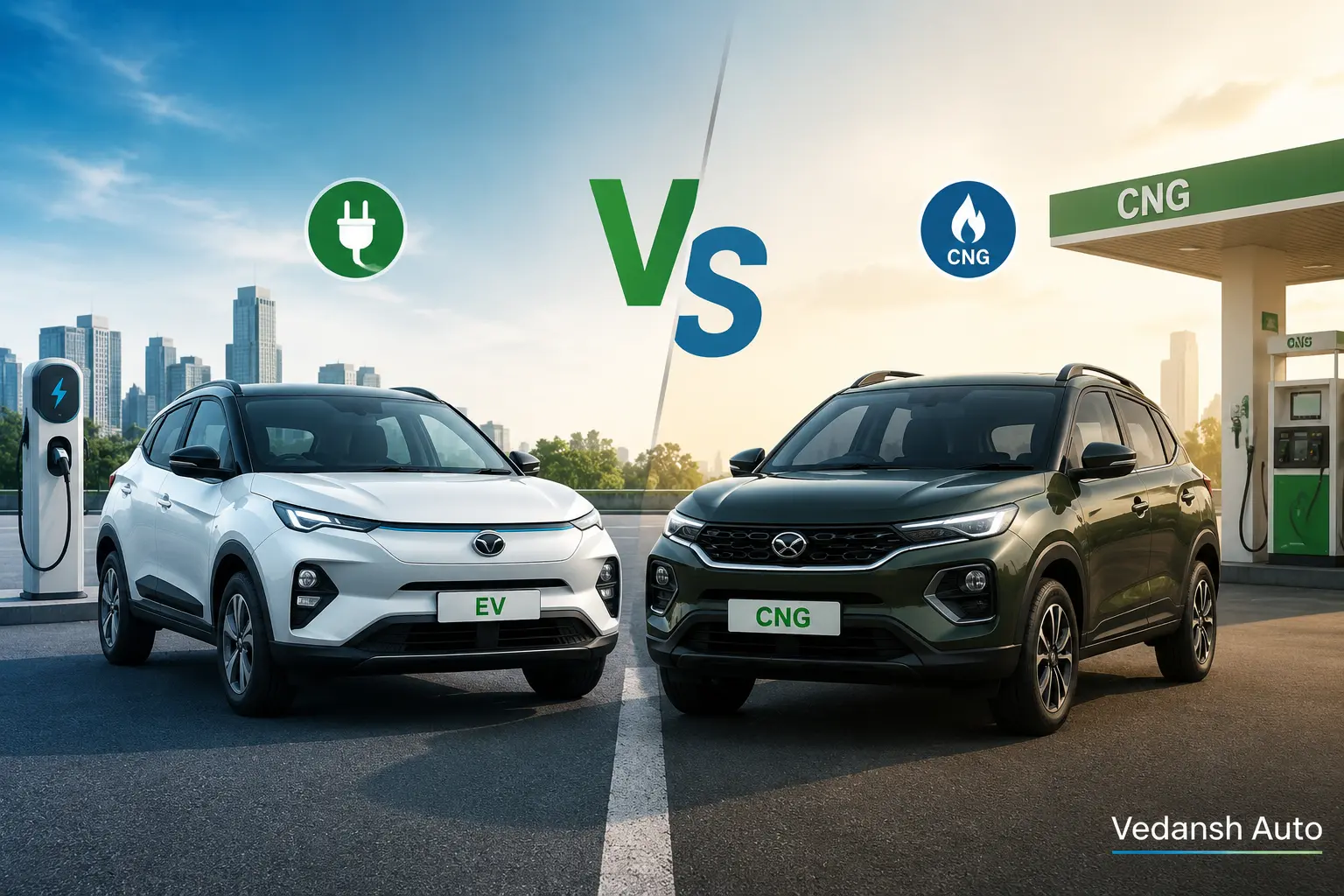
- ▸ CNG cars cost less upfront and refuel in minutes, but running costs are still higher than EVs.
- ▸ EVs cost more to buy but can be dramatically cheaper to run, if you can charge at home.
- ▸ Comparing the EV and CNG versions of the same car model is the clearest way to judge the real difference, since the body, features and platform stay the same.
- ▸ Your daily driving distance and access to home charging matter more than any spec sheet number.
If you are planning to buy a new car in India right now, chances are you are also looking for other options than petrol. Fuel prices keep climbing, and two alternatives have become genuinely mainstream: electric vehicles and CNG cars. Both promise lower running costs, but they solve the problem in very different ways, and they suit very different kinds of buyers.
This post breaks down the real difference between EV and CNG cars in India, using actual models and current ex-showroom prices, so you can see exactly what you gain and give up with each option.
How EV and CNG Cars Actually Work
An EV runs on a battery pack and an electric motor. There is no engine, no exhaust and no combustion. You charge it using electricity, either at home overnight or at a public charging station.
A CNG car still has a regular petrol engine, but it is built (or converted) to also run on compressed natural gas, stored in a cylinder usually placed in the boot. Most modern factory-fitted CNG cars can switch between petrol and CNG, though CNG is what you would use for daily driving to save money.
In short, an EV replaces the fuel system entirely. A CNG car keeps the same engine but gives it a cheaper fuel option.
Upfront Price: Same Car, Two Very Different Numbers
The cleanest way to compare EV and CNG is to look at the same car sold in both versions. This removes the guesswork, since the body, dimensions and most features stay identical between versions, only the powertrain changes.
Tata Punch: EV vs CNG The Tata Punch CNG is priced from around Rs 6.80 lakh to Rs 10.67 lakh (ex-showroom), depending on variant. The Tata Punch EV, built on the same body, starts noticeably higher, from around Rs 9.69 lakh to Rs 12.6 lakh (ex-showroom) depending on battery pack and trim. That works out to roughly Rs 2 to 3 lakh more for the electric version of essentially the same car.
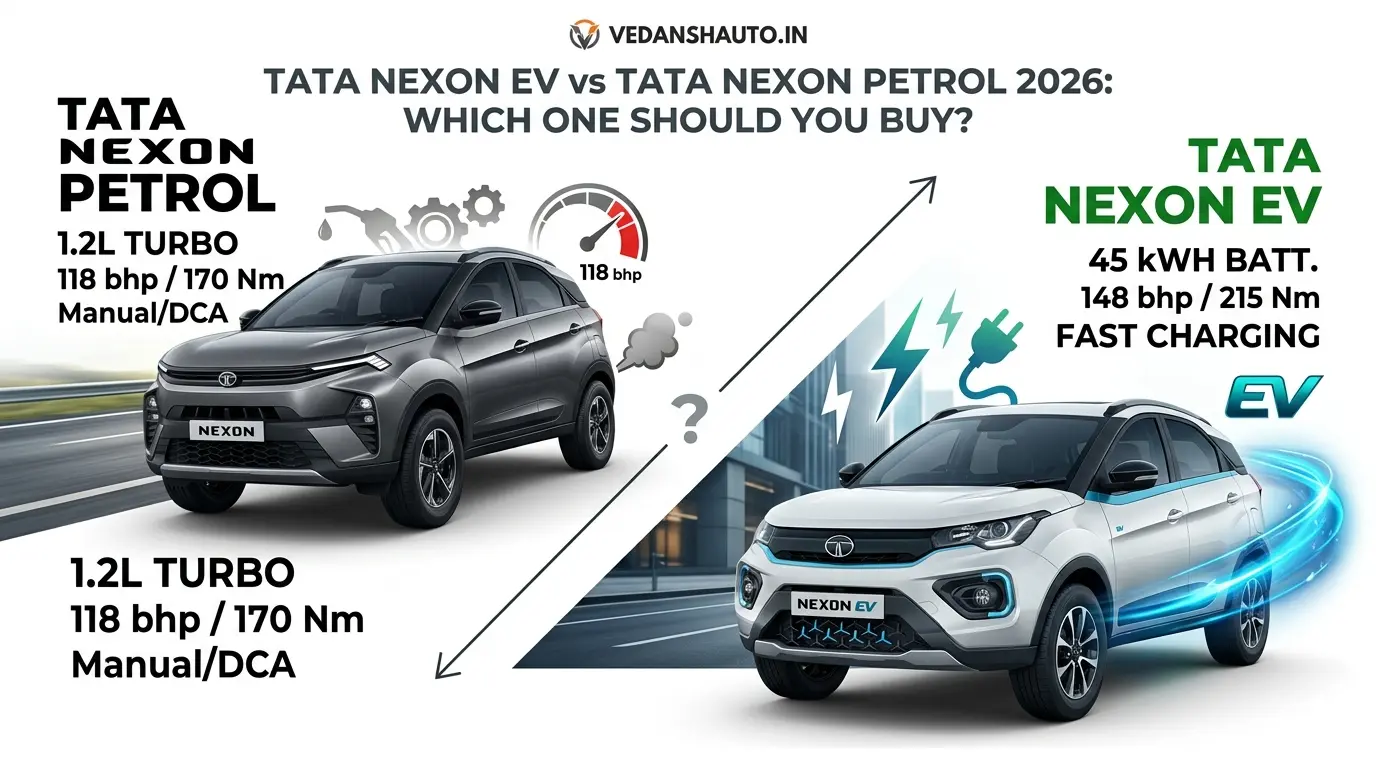
Tata Nexon: EV vs CNG The pattern repeats at the compact SUV level. The Tata Nexon CNG starts from around Rs 8.35 lakh and goes up to about Rs 13.42 lakh (ex-showroom) across variants. The Tata Nexon EV, on the other hand, starts at Rs 12.49 lakh and goes up to about Rs 17.69 lakh (ex-showroom), with the price difference driven mainly by battery size, a 30 kWh medium range pack or a 45 kWh long range pack.
The pattern is consistent across the industry right now: going electric typically adds a premium of Rs 2 lakh to Rs 5 lakh over a comparable CNG version of the same car, and the gap tends to widen as battery size and range go up.
EV vs CNG: Quick Comparison
| Tata Punch CNG | Tata Punch EV | Tata Nexon CNG | Tata Nexon EV | |
| Ex-showroom price | Rs 6.80 – 10.67 lakh | Rs 9.69 – 12.59 lakh | Rs 8.35 – 13.42 lakh | Rs 12.49 – 17.69 lakh |
| Running cost | Rs 3 – 4 per km | Rs 1 – 1.5 per km (home charging) | Rs 3 – 4 per km | Rs 1 – 1.5 per km (home charging) |
| Refuelling / charging time | 3 – 5 minutes | 4 – 6 hours (home AC) | 3 – 5 minutes | 4 – 6 hours (home AC) |
| Range per fill / charge | 200 – 250 km | Up to 350 km (claimed) | 200 – 280 km | 275 – 489 km (claimed, depending on battery) |
| Best suited for | Long trips, no home charging | City driving, home charger available | Long trips, no home charging | City driving, home charger available |
Prices and figures as of July 2026, ex-showroom, and will vary by city and variant.
Running Costs: Where the Real Savings Show Up
This is the section that actually decides the argument for most Indian buyers, since the upfront price gap has to be earned back somewhere.
CNG running costs in India currently work out to roughly Rs 3 to Rs 4 per km, depending on local gas pricing and the car’s efficiency. Models like the Maruti Celerio CNG and WagonR CNG lead on mileage, with ARAI-rated figures around 34 to 35 km/kg, though real-world mileage usually comes in about 15 to 20 percent lower than the ARAI number.
EV running costs are typically much lower, around Rs 1 to Rs 1.5 per km, but only if you are charging at home on a regular domestic electricity connection. If you rely mostly on public DC fast chargers, the cost per km rises substantially, in some cases close to what a CNG car costs to run, since fast charging tariffs are priced at a premium over home electricity.
For someone doing around 1,000 km a month, this difference adds up to real money every year, but the EV advantage only holds up if home charging is realistically available.
Range, Refuelling and Charging Convenience
CNG refuelling takes a few minutes at any filling station. The catch is availability. CNG infrastructure is strong in Delhi NCR, Maharashtra, Gujarat and parts of Uttar Pradesh, but still developing in several southern and eastern states, so it is worth checking your city’s station density before committing to CNG.
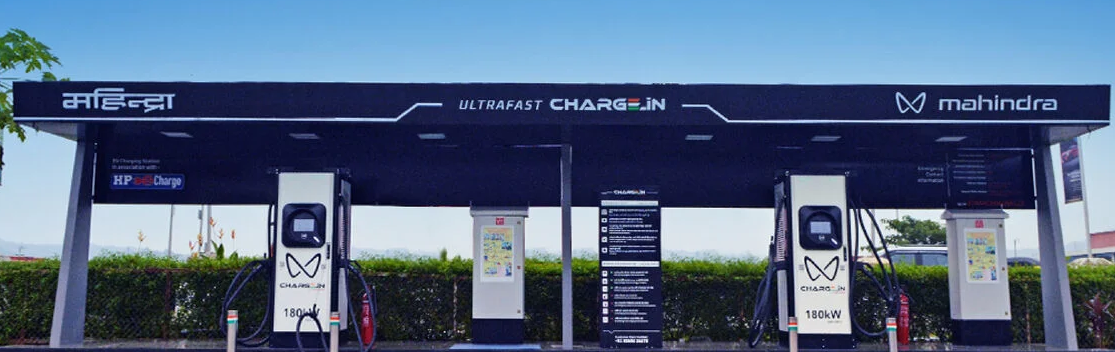
EV charging works differently depending on where you do it. A home AC charger typically takes 4 to 6 hours for a full charge on cars like the Nexon EV, which is fine if you charge overnight and do not need frequent long trips. Public DC fast charging can take a car from 10 to 80 percent in under an hour, but India still has a fairly thin fast-charging network outside major cities, so long-distance travel needs more planning than it would with a CNG or petrol car.
If your driving is mostly within city limits with a fixed overnight parking spot, EV charging is genuinely convenient. If you travel often between cities or do not have access to home charging, CNG’s quick refuelling is currently the more practical option.
Maintenance and Long-Term Ownership
CNG cars need slightly more attention than a pure petrol car. Spark plugs wear out faster because of higher combustion temperatures and typically need replacement every 15,000 to 20,000 km. The CNG cylinder also needs hydro-testing every three years, which is a legal requirement, not an optional service. Factory-fitted twin-cylinder setups, like the ones Tata uses on the Tiago and Punch iCNG, avoid the boot space compromise that older single-cylinder systems had.
EVs have fewer moving parts overall, no engine oil changes, no spark plugs, no exhaust system, which generally means lower routine service costs. The long-term unknown is battery health. Most manufacturers now offer strong battery warranties, and Tata for instance has extended a lifetime HV battery warranty on select Nexon EV variants, which meaningfully reduces the biggest long-term risk of EV ownership.
Who Should Buy What
Go for CNG if:
- You do not have reliable access to home charging
- You frequently drive long distances or between cities
- Your city has strong CNG station coverage
- You want the lowest possible upfront price among the two options
Go for EV if:
- You have a dedicated parking spot where you can install a home charger
- Most of your driving is within the city
- You want the lowest possible running cost and are comfortable with the higher upfront price
- You plan to keep the car long enough to benefit from battery warranty coverage
For a lot of Indian buyers today, the honest answer is that CNG remains the safer economic bet unless home charging is genuinely available, since an EV’s lower running cost only pays off the higher purchase price over several years of driving.
EV vs CNG Car Sales in India: The Numbers So Far
While the latest CNG and EV sales figures come from different reporting periods (FY2026 for CNG and CY2025 for EV), they still paint a clear picture of the current market. EVs attract much of the attention, but CNG cars continue to account for a much larger share of India’s passenger vehicle market.
In FY2026, CNG-powered cars crossed the 10 lakh unit mark for the first time, making up nearly 22% of total passenger vehicle sales and overtaking diesel as a fuel choice for the second year running. Maruti Suzuki accounts for the majority of CNG passenger car sales, having sold 5.9 lakh CNG cars in FY2025 alone, a 70.6% share of the entire CNG segment, with the Maruti Ertiga as the single best-selling CNG model in the country at over 1.45 lakh units in FY2026. Tata Motors comes in second, helped by its twin-cylinder iCNG technology offered on models such as the Tiago, Punch and Nexon, and Hyundai holds a smaller third-place share.
Electric passenger vehicles, meanwhile, had their best year yet in CY2025 but from a much smaller base, at just under 1.77 lakh units sold, a strong 77% jump from the year before. Tata Motors remained the largest electric passenger vehicle manufacturer, though its share has fallen sharply, down to 40% in CY2025 from 62% the year before, as Mahindra, JSW MG Motor India, and new entrants like Tesla and VinFast take a growing slice.
At a Glance: EV vs CNG Passenger Vehicle Sales
| CNG Cars | Electric Cars | |
| Latest reported full-year sales | 10.14 lakh units (FY2026) | 1.77 lakh units (CY2025) |
| Share of total car market | ~22% | ~5.8% (April 2026) |
| Year-on-year growth | Strong, overtook diesel | 77% YoY (CY2025) |
| Market leader | Maruti Suzuki (70.6% share) | Tata Motors (40% share) |
| Best-selling model | Maruti Ertiga (1.45 lakh units) | Not separately disclosed by most OEMs |
All figures refer to passenger vehicles only unless otherwise stated, allowing a like-for-like comparison between CNG and EV sales.
The takeaway for anyone comparing the two on the ground: CNG cars currently outsell EV cars in India by roughly six to one. EVs often dominate the headlines and the two-wheeler and three-wheeler segments, but when it comes to actual passenger cars bought by Indian families, CNG remains the far more common choice today.
Frequently Asked Questions
Is CNG or EV better for a daily office commute in India?
For a typical city commute, both work well. EV tends to be cheaper per km if you charge at home, while CNG is the simpler option if you cannot install a home charger or if you also make frequent highway trips.
Which is cheaper to maintain, EV or CNG?
EVs generally cost less to maintain over time, since there is no engine oil, spark plugs or exhaust system to service. CNG cars need periodic spark plug changes and mandatory cylinder hydro-testing every three years.
Is the EV version of a car always more expensive than its CNG version?
Yes, currently every major Indian car sold in both EV and CNG form is priced higher as an EV, typically by Rs 2 lakh to Rs 5 lakh, mainly because of battery cost.
Does CNG reduce a car’s power compared to petrol?
Yes, slightly. Most CNG cars produce about 5 to 10 percent less power in CNG mode compared to running on petrol, though this is rarely noticeable in normal city driving.
Prices mentioned in this post are ex-showroom figures as of July 2026 and vary by city, variant and ongoing manufacturer offers. Please check current prices with your local dealership or on manufacturer websites before making a purchase decision.