Electric Car Maintenance Cost in India: What You’ll Actually Pay
 Published on 8 July 2026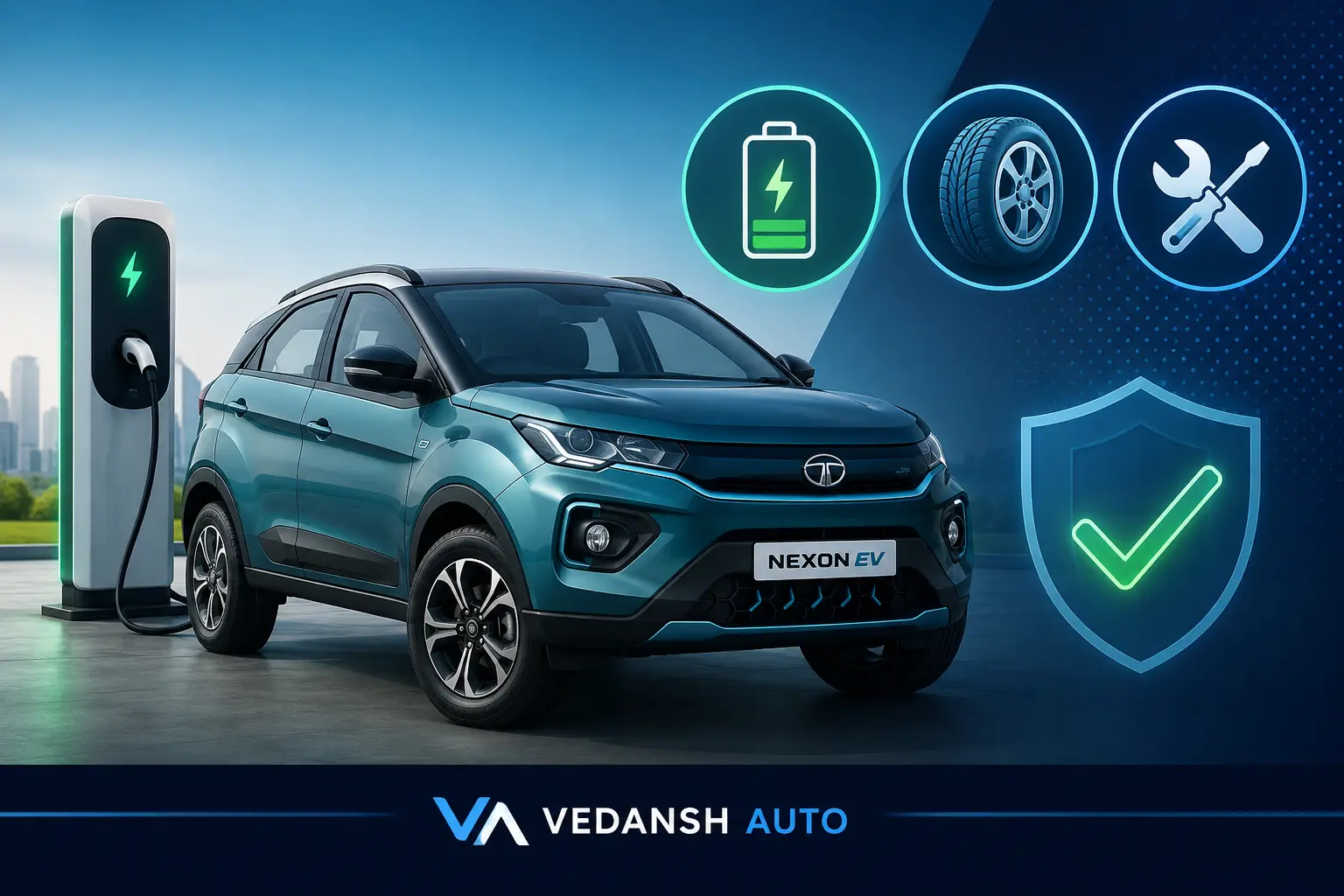
Many people think electric cars need almost no maintenance. That’s not fully true. An EV does cost less to maintain than a petrol or diesel car, but it still needs regular care. The battery, brakes, tyres, and software all need checks on a schedule.
To make this real, we’re using the Tata Nexon EV, India’s best selling electric SUV, as our example. While most electric cars follow a broadly similar maintenance pattern, the exact service intervals and warranty terms vary by manufacturer. Always refer to your owner’s manual or authorised service centre for your specific model.
Why EVs Cost Less to Maintain
A petrol or diesel car has thousands of moving parts across its engine and transmission, while an electric drivetrain has far fewer. This simpler mechanical design is one of the biggest reasons EVs generally cost less to maintain.
There’s no engine oil to change. No spark plugs. No timing belt. No clutch. No exhaust pipe to rust. EVs also use regenerative braking. This means the electric motor helps slow the car down and sends some energy back to the battery. So the brakes are used less, and they last longer. Unlike petrol cars, EVs regularly receive software updates that can improve battery management, charging behaviour, efficiency, and infotainment features.
This doesn’t mean an EV needs zero care. It just needs different care.
What Gets Checked During an EV Service
A normal service on an electric car usually covers:
- Battery health check and software updates
- Coolant check for the battery cooling system
- Brake fluid and brake check
- Tyre rotation and alignment
- Cabin filter (AC filter) change
- 12V battery check (a small battery that runs lights, screen, and electronics, not the main battery)
- Suspension and AC check
- Charging port inspection and cleaning. During scheduled service, technicians inspect the charging port for dust, moisture, corrosion, or damage to ensure safe charging.
Notice what’s missing: no oil filter, no engine air filter, no spark plugs.
Tata Nexon EV: Official Service Schedule and Warranty
Here is what Tata Motors officially states for the Nexon EV 45 kWh:
| Coverage | Duration |
| Vehicle warranty | 3 years or 1,25,000 km, whichever comes first |
| Battery and motor warranty | 8 years or 1,60,000 km, whichever comes first |
| Lifetime battery warranty (new, for private first owners) | No km limit, valid for the life of the vehicle (15 years from first registration) |
Tata started offering this lifetime battery warranty on the Nexon.ev 45 kWh in mid-2025. It’s a much stronger promise than the usual 8-year cover most EVs come with. But it only applies if you’re a private individual owner, not a company or fleet. So check the terms if you’re buying for business use.
Service intervals and warranty information are based on Tata Motors’ official owner’s manual and warranty documentation for the Nexon.ev 45.
- For the Nexon EV, the first two scheduled services are typically complimentary and mainly include inspections, software checks, and necessary top-ups.
- The third service, around 15,000 km or 12 months, is a detailed check with a software update.
- Routine scheduled service for the Nexon EV generally costs around ₹2,000–₹5,000 per year, although the final amount varies depending on labour rates, consumables replaced, and your location.
Actual maintenance costs vary depending on labour charges, consumables replaced during service, your city, and vehicle usage. It’s a good idea to call your local Tata Motors dealer and confirm the current price, since these numbers can change.
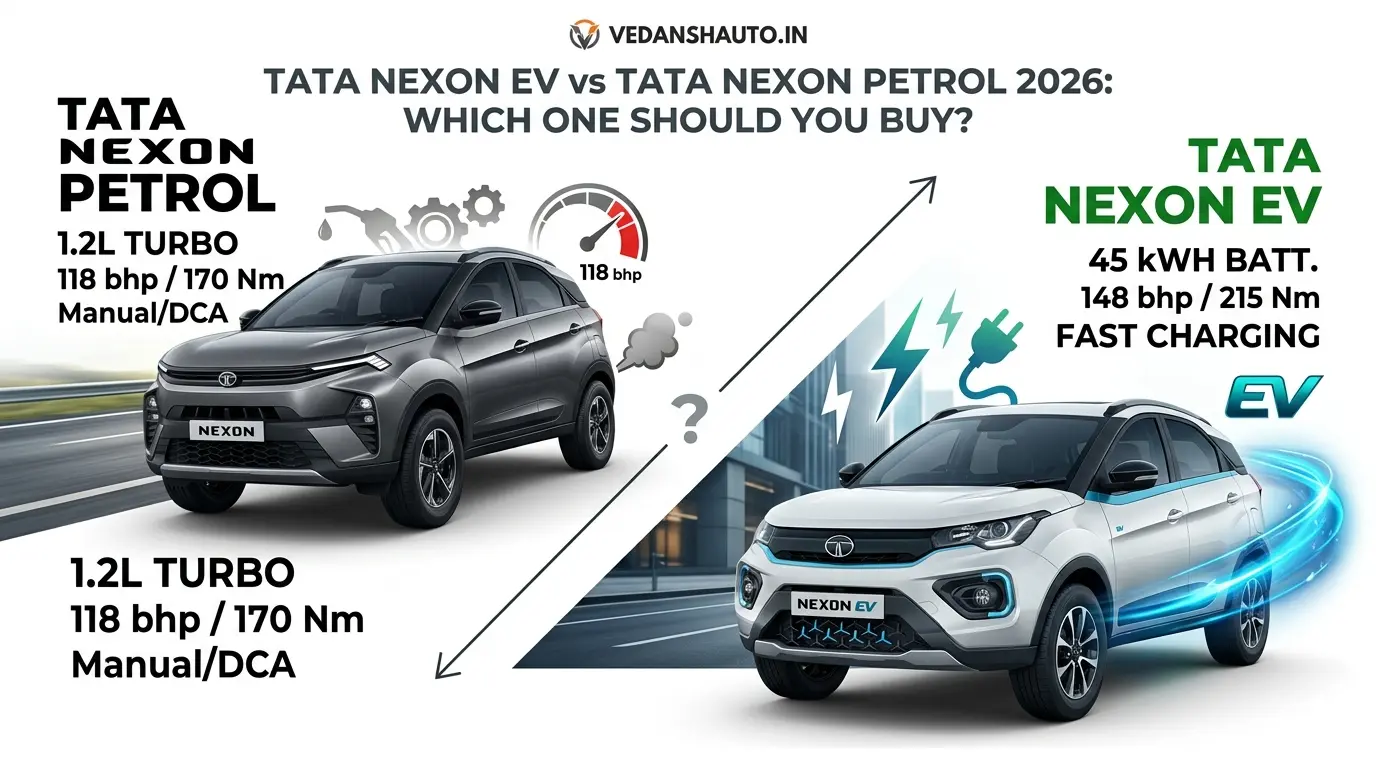
Yearly Cost: Nexon EV vs Nexon Petrol
This is where the savings really show up. Based on common industry numbers for the Nexon range:
| Cost item | Nexon EV | Nexon Petrol |
| Yearly service cost | ₹2,000 – ₹5,000 | ₹7,000 – ₹8,500 |
| Engine oil and filters | Not needed | Included above |
| Brake fluid, coolant | Needed, but less often | Needed |
| 5-year total service cost | About ₹22,000 – ₹35,000 | About ₹31,000 – ₹40,000+ |
| Routine Servicing | Lower | Higher |
The EV saves money mostly because it has no engine to look after. Insurance premiums for EVs are often slightly higher than comparable petrol models because battery packs are expensive to repair or replace. However, the actual premium depends on the insurer, insured value, city, and applicable discounts.
Battery, Brakes, and Tyres: What Owners Worry About Most
Battery. The Nexon EV’s 45 kWh Ziptron battery is liquid-cooled and sealed against dust and water (IP67 rated). Most modern liquid-cooled EV batteries lose only a small percentage of their capacity each year under normal usage, although actual degradation depends on climate, charging habits, and mileage. This is why the 8-year (or now lifetime) warranty is such a big deal when comparing EVs. Try not to keep the battery at 100% charge for long periods. Also avoid letting it drop all the way to 0%. Both habits wear the battery down faster over time.
Brakes. Because of regenerative braking, brake pads on an EV usually last much longer than on a petrol car, sometimes 1.5 to 2 times longer. This is simply because the actual brakes are used less in daily driving.
Tyres. This is one area where EVs are actually tougher on your wallet. Since EVs are generally heavier and deliver instant torque, tyre wear can be faster than an equivalent petrol car. Depending on driving style and road conditions, some owners may see tyre life reduced by around 20–30%. Plan for earlier tyre replacement, and consider tyres made specifically for EVs, which are built to handle the extra weight and force.
Tips to Keep EV Maintenance Costs Low
- Follow the service schedule on time. Don’t skip visits, since software updates keep the battery system running well.
- Avoid too much fast charging. Frequent DC fast charging builds up heat and can wear the battery down faster over the years.
- Get your tyres rotated on schedule, since this helps even out the faster wear.
- Use authorised service centres while your battery is under warranty. Getting work done elsewhere can affect your warranty claim.
- Don’t forget the small 12V battery. It’s easy to overlook since it’s not the main battery, but a weak 12V battery can leave your car unable to start, even if the main battery is fully charged.
Frequently Asked Questions
Is electric car maintenance really cheaper than petrol cars in India?
Yes. Service costs are usually 40-60% lower for a regular EV compared to a similar petrol car. This is mainly because there’s no engine oil, spark plugs, or clutch to look after.
How often does the Tata Nexon EV need a service?
About every 15,000 km or 12 months, whichever comes first, after the first two free services.
Do EVs need oil changes?
No. There’s no engine, so no engine oil is needed. Some EVs have a small amount of gearbox oil, but it’s checked much less often than engine oil in a petrol car.
Why do EV tyres wear out faster?
The extra weight of the battery pack, along with the instant power from the electric motor, puts more stress on the tyres. This leads to 20-30% faster wear compared to a similar petrol car.
Is EV insurance more expensive?
Insurance premiums are often slightly higher than for comparable petrol cars because battery packs are expensive to repair or replace. However, the difference varies by insurer, location, and the insured value of the vehicle.
What happens to the battery warranty if I sell my Nexon EV?
Tata’s lifetime battery warranty only applies to the first private owner. If the car is sold, the new owner gets 8 years or 1,60,000 km of coverage from the date the car was first registered. The new owner must also inform Tata about the ownership change for this coverage to apply.