CNG Cars in India: Prices and Models
 Published on 4 October 2026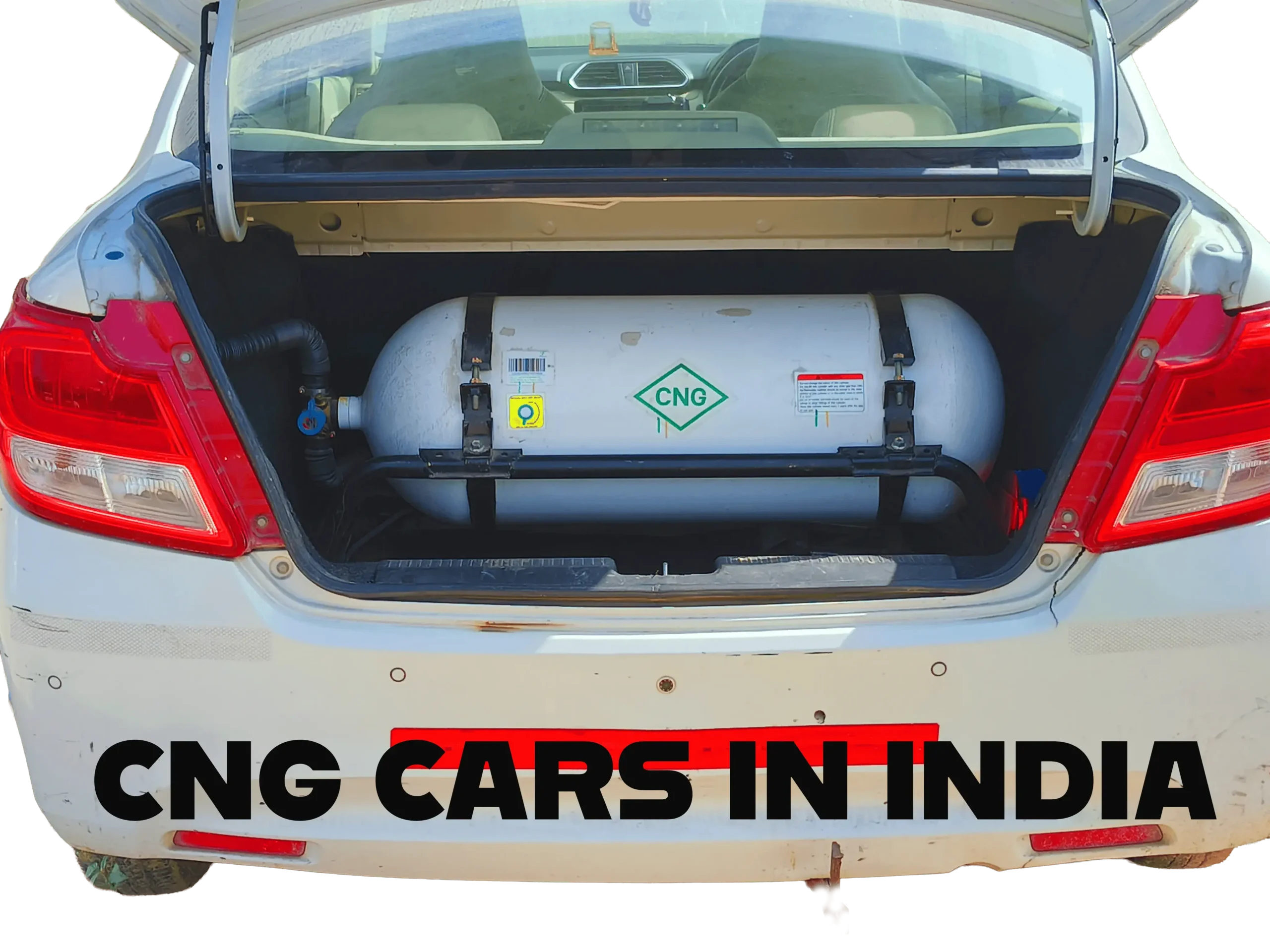
CNG cars in India are no longer limited to small hatchbacks and entry-level sedans. Buyers can now choose from a wider range of factory-fitted CNG vehicles, including premium hatchbacks, compact SUVs, larger SUVs and three-row MPVs.
Maruti Suzuki continues to offer CNG options across several price segments. Tata Motors has expanded its iCNG range with different body styles and luggage-space solutions, while Hyundai and Toyota offer alternatives in selected segments. Kia has also entered the factory-fitted CNG MPV segment with the Carens and Carens Clavis.
Another important development is the arrival of automatic CNG options. Maruti Suzuki has introduced S-CNG versions of the Swift, Dzire and Baleno with an automated manual transmission (AMT), adding to the CNG automatic options already available from Tata Motors.
For buyers considering a new car, the choice is now about more than claimed mileage. Purchase price, annual running, luggage requirements, gearbox preference and access to CNG stations all affect whether a CNG car makes financial and practical sense.
CNG Cars in India: Quick Overview
- Most affordable options: Small CNG hatchbacks such as the Maruti Suzuki S-Presso and Alto K10.
- Family hatchbacks: Maruti Suzuki WagonR, Swift, Baleno, Tata Tiago and Altroz.
- CNG sedans: Tata Aeris, Hyundai Aura and Maruti Suzuki Dzire.
- CNG SUVs and crossovers: Tata Punch and Nexon, Hyundai Exter, Maruti Suzuki Fronx, Brezza, Victoris and Grand Vitara, and Toyota’s CNG-equipped models.
- Family MPVs: Maruti Suzuki Ertiga and XL6, Toyota Rumion, Kia Carens and Carens Clavis.
- Automatic options: Tata Aeris, selected Tata iCNG models and the automatic CNG versions of the Maruti Suzuki Swift, Dzire and Baleno.
CNG availability varies by model and variant. Not every trim comes with a factory-fitted CNG system, so check the exact variant before booking.
CNG Cars in India: Model List and Starting Prices
The following table brings together popular factory-fitted CNG passenger cars across different segments. Prices are indicative starting ex-showroom figures based on September 2026 comparisons. They may vary with variant revisions, location and price updates.
| Segment | Model | Indicative CNG starting price |
| Small hatchback | Maruti Suzuki S-Presso | ₹4.64 lakh |
| Small hatchback | Maruti Suzuki Alto K10 | ₹4.82 lakh |
| Hatchback | Tata Tiago | ₹5.87 lakh |
| Hatchback | Maruti Suzuki WagonR | ₹5.94 lakh |
| Hatchback | Maruti Suzuki Celerio | ₹5.98 lakh |
| Hatchback | Hyundai Grand i10 Nios | ₹7.33 lakh |
| Premium hatchback | Tata Altroz | ₹7.30 lakh |
| Hatchback | Maruti Suzuki Swift | ₹7.57 lakh |
| Premium hatchback | Maruti Suzuki Baleno | ₹7.92 lakh |
| Premium hatchback | Toyota Glanza | ₹8.49 lakh |
| Compact sedan | Hyundai Aura | ₹6.90 lakh |
| Compact sedan | Maruti Suzuki Dzire | ₹8.18 lakh |
| Compact sedan | Tata Aeris | ₹6.29 lakh |
| Micro SUV | Tata Punch | ₹6.85 lakh |
| Small SUV | Hyundai Exter | ₹7.00 lakh |
| Crossover | Maruti Suzuki Fronx | ₹7.94 lakh |
| Compact SUV | Tata Nexon | ₹8.35 lakh |
| Crossover | Toyota Urban Cruiser Taisor | ₹8.45 lakh |
| Compact SUV | Maruti Suzuki Brezza | ₹9.40 lakh |
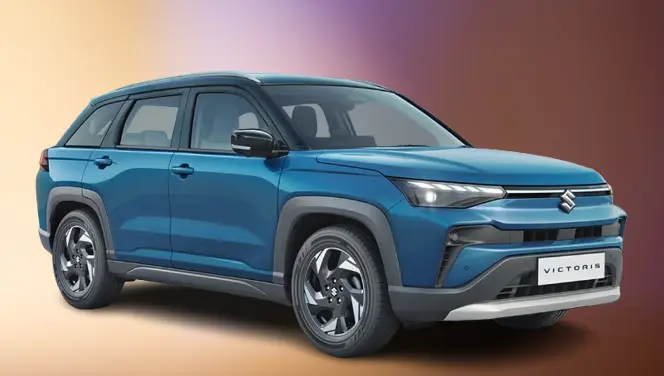
| SUV | Maruti Suzuki Victoris | ₹11.55 lakh |
| SUV | Maruti Suzuki Grand Vitara | ₹13.05 lakh |
| SUV | Toyota Urban Cruiser Hyryder | ₹13.71 lakh |
| MPV | Maruti Suzuki Ertiga | ₹10.94 lakh |
| MPV | Toyota Rumion | ₹11.69 lakh |
| MPV | Kia Carens | ₹12.12 lakh |
| MPV | Kia Carens Clavis | ₹12.39 lakh |
| MPV | Maruti Suzuki XL6 | ₹12.61 lakh |
| Van | Maruti Suzuki Eeco | ₹6.46 lakh |
1. Maruti Suzuki CNG Cars
Maruti Suzuki has one of the widest factory-fitted CNG portfolios in India. Its Arena range includes entry-level cars, hatchbacks, a sedan, SUVs and an MPV, while Nexa offers CNG options in selected premium models.
Maruti Suzuki Arena CNG models
- Alto K10
- S-Presso
- Celerio
- WagonR
- Swift
- Dzire
- Eeco
- Ertiga
- Brezza
- Victoris
Maruti Suzuki Nexa CNG models
- Baleno
- Fronx
- Grand Vitara
- XL6
The range covers different budgets and usage patterns. The Alto K10, S-Presso and Celerio suit buyers looking for a compact city car. The WagonR and Swift offer hatchback alternatives, while the Dzire is worth considering for buyers who prefer a sedan.
For larger families, the Ertiga and XL6 offer three-row seating. Buyers considering the Brezza, Fronx, Grand Vitara or Victoris should compare the exact CNG variant’s price, equipment and luggage capacity rather than assume every petrol variant has a CNG equivalent.
Maruti Suzuki introduces automatic CNG cars
Maruti Suzuki has introduced automatic S-CNG versions of the Swift, Dzire and Baleno. These models use an automated manual transmission, or AMT, which removes the need for manual clutch operation.
The manufacturer’s announced starting ex-showroom prices are:
| Model | Automatic CNG starting price |
| Maruti Suzuki Swift | ₹7,92,400 |
| Maruti Suzuki Dzire | ₹8,53,100 |
| Maruti Suzuki Baleno | ₹8,32,400 |
These are specific to the newly introduced automatic CNG versions and should not be confused with the starting prices of their manual CNG variants.
For people who drive daily in congested cities, an AMT can make commuting less tiring. However, an AMT does not feel exactly like a conventional torque-converter automatic. Test-drive the CNG version in traffic before making a decision.
2. Tata CNG Cars
Tata Motors offers factory-fitted iCNG versions of several mainstream passenger cars, including the Tiago, Altroz, Punch and Nexon. The company has also been developing its CNG range around different tank layouts and transmission options.
Tata’s CNG range gives buyers choices across hatchbacks, sedans and SUVs. The Tiago is worth considering for everyday city use, while the Altroz provides a premium-hatchback alternative. The Punch and Nexon cater to buyers who prefer an SUV-style body. The newly released Aeris is for those who want a CNG sedan.
Twin-cylinder technology and luggage space
One of the practical concerns with a conventional CNG installation is the space occupied by the cylinder in the boot. Tata uses twin-cylinder technology in several iCNG models, with the aim of making better use of available luggage space.
The arrangement can improve practicality, but buyers should still inspect the actual boot. Check whether the luggage area can accommodate the bags you usually carry, whether the spare wheel is accessible and whether the layout works for family trips.
Tata also offers CNG with an AMT on selected models. Variant availability can differ, so confirm the transmission offered with the particular model and trim you are considering.
3. Hyundai CNG Cars
Hyundai’s factory-fitted CNG range includes the Grand i10 Nios, Aura and Exter.
| Model | Body style | Typical use case |
| Grand i10 Nios | Hatchback | City commuting and small families |
| Aura | Compact sedan | Daily commuting and buyers who prefer a separate boot |
| Exter | Small SUV | City use with a taller seating position |
Hyundai’s Hy-CNG Duo technology uses a dual-cylinder layout in models such as the Grand i10 Nios and Exter. This is designed to preserve more usable luggage space than a conventional single-cylinder arrangement.
As with other manufacturers, the CNG option is available only in selected variants. Compare equipment as well as price: a cheaper CNG trim may not have all the comfort, convenience or safety features found in a higher petrol variant.
4. Toyota CNG Cars
Toyota offers factory-fitted CNG options in selected models, including the Glanza, Urban Cruiser Taisor, Urban Cruiser Hyryder and Rumion.
The Glanza is a premium hatchback option, while the Taisor provides a crossover-style alternative. The Hyryder gives buyers a larger SUV option, and the Rumion caters to families who need three-row seating.
Toyota’s CNG line-up overlaps with models offered by Maruti Suzuki in some segments. Buyers should compare the exact variant specifications, warranty terms, service access and current prices rather than assume the cars are identical in every detail.
For the Rumion, the main consideration is whether the vehicle suits the family’s passenger and luggage requirements. Check the space available with all three rows in use, particularly if the car will regularly carry six or seven occupants.
5. Kia Carens and Carens Clavis CNG
Kia has expanded its range with factory-fitted CNG versions of the Carens and Carens Clavis. These models bring CNG into a segment where buyers often need room for a larger family.
Indicative starting prices reported for the new versions are ₹12.12 lakh for the Carens CNG and ₹12.39 lakh for the Carens Clavis CNG, ex-showroom. Variant prices and availability should be confirmed with Kia before booking.
The new factory-fitted versions should be distinguished from earlier Carens vehicles converted with dealer-installed CNG kits. A dealer-installed kit is not automatically the same as a factory-fitted CNG variant.
If you are considering one of these MPVs, pay particular attention to three points:
- Seating and luggage: Check how much luggage space remains when the third row is occupied.
- Performance: A petrol-CNG engine can deliver different power and response in CNG mode compared with petrol.
- Transmission: Confirm that the selected CNG variant has the gearbox you want. The newly launched versions have been reported with a manual gearbox.
For families with high monthly running, a CNG MPV may be worth comparing with petrol and diesel alternatives. The final decision depends on fuel savings, the price difference, passenger comfort and the type of journeys the vehicle will undertake.
Advantages of Buying a CNG Car
1. Lower fuel expenditure
CNG can reduce fuel costs per kilometre compared with petrol, depending on local prices and real-world efficiency.
2. More factory-fitted choices
Buyers can choose from hatchbacks, sedans, SUVs and MPVs rather than being restricted to a small group of entry-level cars.
3. Petrol operation remains available
Most factory-fitted CNG passenger cars in this list are bi-fuel vehicles that can operate on petrol as well as CNG. This can be useful when a CNG station is not available on a particular route. Check the manufacturer’s operating instructions for the exact model.
4. More options for city driving
The introduction of automatic CNG variants makes the fuel more accessible to some urban buyers who prefer not to operate a manual gearbox in heavy traffic.
5. Factory integration
A factory-fitted CNG system is developed as part of the vehicle specification. Buyers should still follow the prescribed maintenance schedule and check the warranty terms, but they avoid having to choose and arrange a separate aftermarket conversion.
Disadvantages of CNG Cars
1. Higher initial purchase price
The CNG variant usually costs more than the comparable petrol version. Buyers need to calculate whether the expected fuel savings will recover the premium.
2. Boot-space compromises
The cylinder and related hardware can reduce usable luggage space. Twin-cylinder and underbody arrangements can help, but the actual layout varies by vehicle.
3. Reduced performance in CNG mode
Power and torque can differ between petrol and CNG operation. This is especially worth checking if you regularly drive on highways, climb steep roads or carry a full load of passengers.
4. Refuelling convenience varies
CNG availability is not uniform across India. If the nearest station requires a long detour or regularly has queues, some of the convenience and cost benefits may be reduced.
5. Fewer powertrain and variant combinations
Not every trim, engine or transmission is offered with CNG. Buyers may have to give up a preferred feature or gearbox to get the fuel option they want.
What to Check Before Buying a CNG Car
Before booking a CNG vehicle, use this checklist:
- Calculate your monthly running: Estimate how many kilometres you drive in a typical month.
- Compare equivalent variants: Check the CNG price against a petrol version with similar features.
- Estimate fuel savings: Use local petrol and CNG prices and realistic mileage figures.
- Check station availability: Look at the stations near your home, workplace and regular routes.
- Inspect the boot: Try your usual luggage with the seats arranged as you normally use them.
- Choose the right gearbox: Check whether the CNG variant is manual or automatic.
- Take a test drive: Compare acceleration, refinement and drivability in traffic.
- Confirm warranty terms: Read the manufacturer’s coverage for the vehicle and CNG system.
- Ask about maintenance: Understand the service schedule and any CNG-specific inspections.
- Verify the final price: Get a written quotation for the exact variant, including applicable registration, insurance and accessories.
Which CNG Car Should You Consider?
The right choice depends on your budget and how you use your car.
| Your requirement | Models worth comparing |
| Lowest purchase budget | Maruti Suzuki S-Presso, Alto K10 |
| Small family and city commuting | Maruti Suzuki Celerio, WagonR, Tata Tiago |
| Premium hatchback | Maruti Suzuki Baleno, Swift, Tata Altroz, Toyota Glanza |
| Sedan for regular commuting | Hyundai Aura, Maruti Suzuki Dzire, Tata Aeris |
| Small SUV | Tata Punch, Hyundai Exter |
| Compact SUV or crossover | Tata Nexon, Maruti Suzuki Brezza, Fronx, Toyota Taisor |
| Larger SUV | Maruti Suzuki Victoris, Grand Vitara, Toyota Hyryder |
| Six- or seven-seat family vehicle | Maruti Suzuki Ertiga, XL6, Toyota Rumion, Kia Carens, Carens Clavis |
| Automatic CNG option | Selected Tata iCNG AMT models, Maruti Suzuki Swift CNG AMT, Dzire CNG AMT, Baleno CNG AMT |
This is a shortlist by body style and use case, not a ranking. Compare the actual variant specifications, current prices, safety equipment, luggage space and test-drive experience before deciding.
Final Word
The CNG-car market in India now covers more than budget hatchbacks. Buyers can compare sedans, compact SUVs, larger SUVs and family MPVs, with automatic options beginning to expand the choice further.
CNG is worth considering when the car will cover enough kilometres to recover its additional purchase cost and when refuelling is convenient. However, the lowest claimed running cost should not be the only deciding factor. Boot space, performance, equipment, gearbox preference and the availability of CNG along regular routes are equally important.
Before booking, compare the current prices of equivalent petrol and CNG variants, calculate the likely savings using local fuel rates, and inspect the exact vehicle you intend to buy.
Frequently Asked Questions
Which is the cheapest CNG car in India?
The Maruti Suzuki S-Presso and Alto K10 are among the lowest-priced factory-fitted CNG cars in the market. Their exact starting prices can change with variant and price revisions, so check the latest manufacturer’s price list before booking.
Are CNG cars cheaper to maintain?
Not necessarily in every case. Fuel expenditure may be lower, but maintenance costs depend on the model, service schedule, usage and local labour charges. Follow the manufacturer’s recommended inspections for the CNG system.
Do CNG cars have less boot space?
Many CNG cars lose some luggage space because of the cylinder. Some manufacturers use twin-cylinder or underbody layouts to improve practicality. Inspect the actual vehicle instead of relying only on the claimed seating capacity or body style.
Are automatic CNG cars available in India?
Yes. Selected Tata iCNG models offer an AMT, and Maruti Suzuki has introduced automatic CNG versions of the Swift, Dzire and Baleno. Availability depends on the exact model and variant.
Is a factory-fitted CNG car better than an aftermarket conversion?
A factory-fitted CNG car is integrated into the manufacturer’s vehicle specification and is generally simpler for buyers who want a ready-made CNG option. A conversion may be possible for certain vehicles, but buyers must verify the kit’s compatibility, applicable approvals, installer credentials, warranty implications and required documentation.
Is a CNG car suitable for highway driving?
It can be, depending on the model, passenger load, route and availability of CNG stations. Compare performance in CNG mode and plan refuelling stops before long journeys. Petrol operation can provide an alternative in bi-fuel models, subject to the manufacturer’s instructions.
How much should I drive to justify buying a CNG car?
There is no single distance that suits every buyer. Calculate the price premium over the equivalent petrol variant and divide it by the expected saving per kilometre. The result gives an approximate break-even distance. Your monthly running then indicates how long it may take to recover the premium.