How to Choose Between a Compact SUV and a Mid-Size SUV
 Published on 21 August 2026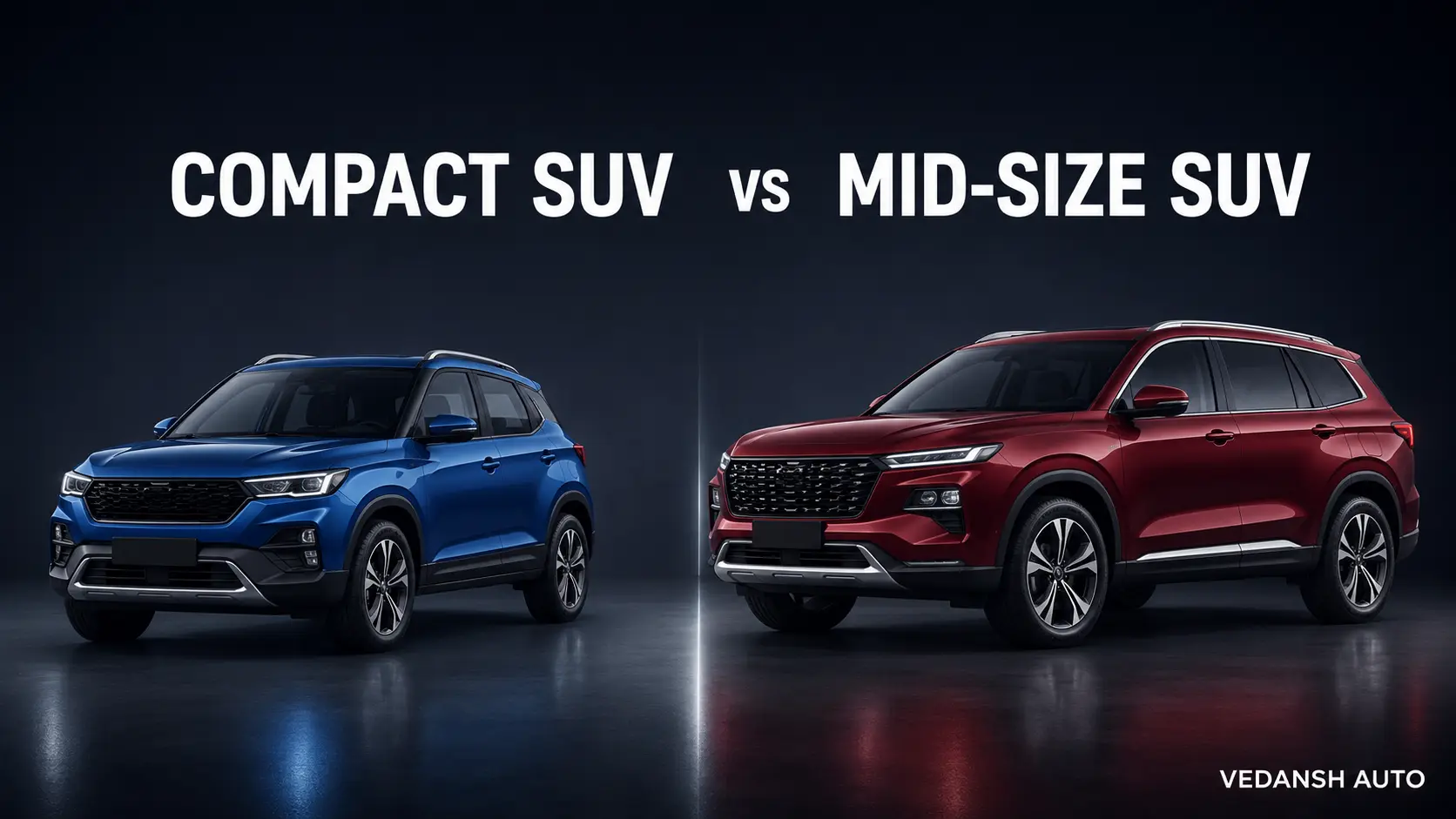
SUVs dominate car sales in India today, but that also means buyers now face a new confusion. Do you go for a compact SUV or step up to a mid-size one? Both segments overlap in price at certain trims, and showroom brochures do not always make the difference clear. This post breaks it down in simple terms, so you can pick the segment that actually fits your life, not just your budget on paper.
What Counts as Compact vs Mid-Size in India
Compact SUVs are generally shorter in length, easier to handle in traffic, and priced lower on average. Popular examples include the Tata Nexon, Maruti Brezza, and Hyundai Venue.
Mid-size SUVs are longer, roomier, and usually come with bigger engine options. Popular examples include the Hyundai Creta, Tata Harrier, and Maruti Grand Vitara.
The price gap between a loaded compact SUV and a base mid-size SUV can be small, which is exactly why many buyers get stuck choosing between the two.
Space and Practicality
This is often the biggest deciding factor for Indian families.
Consider a family of four with elderly parents visiting a few times a year. A compact SUV can feel tight on rear legroom and boot space when everyone travels together with luggage. A mid-size SUV like the Hyundai Creta gives noticeably more knee room and a bigger boot, which makes a real difference on long trips or during festival travel when the car is packed with people and bags.
On the other hand, a couple or a small family of three, without frequent extra passengers, may never feel the space crunch in a compact SUV. In that case, paying extra for a mid-size SUV mainly buys unused space.
City Driving vs Highway Use
Where you drive most often matters just as much as who you carry.
Think of a techie in Bangalore who deals with narrow residential lanes, tight apartment parking, and heavy daily traffic. A compact SUV is easier to manoeuvre and park in these conditions, and the smaller turning radius genuinely helps in day-to-day city driving.
Now compare that with a family that frequently drives from Delhi to Jaipur or similar highway routes. A mid-size SUV feels more planted at higher speeds, offers better highway stability, and is generally more comfortable over long stretches. If your driving pattern leans heavily towards highway trips, this comfort difference becomes noticeable within the first couple of hours on the road.
Budget and Running Cost
Price is rarely just about the on-road figure. It also includes insurance, fuel, and maintenance over the years.
A first-time SUV buyer working with a tight budget, say someone buying their first car after years of using two-wheelers, usually finds a compact SUV more sensible. Lower insurance premiums, better fuel efficiency, and lower service costs help keep the total cost of ownership manageable.
Compare this to someone upgrading from a sedan who already has a stable budget and wants more presence and comfort. For this buyer, the extra running cost of a mid-size SUV is a reasonable trade-off for the added space, power, and features.
Features and Comfort
Moving from a compact SUV to a mid-size one usually brings a step up in a few areas: bigger engine options, more premium interior materials, and often more advanced safety features like additional airbags or driver assistance systems on higher trims. Compact SUVs have closed this gap quite a bit in recent years, but mid-size SUVs still tend to feel a notch more premium inside, especially in dashboard design and seat comfort on longer drives.
Quick Comparison
| Factor | Compact SUV | Mid-Size SUV |
| Ideal for | Small families, singles, couples | Families of 4+, frequent travellers |
| Best suited to | City driving, tight parking | Highway trips, long drives |
| Running cost | Lower | Higher |
| Space | Adequate for daily use | Noticeably more room |
| Typical buyer | First-time SUV buyer, budget-conscious | Upgrading from a sedan, comfort-focused |
How to Decide: Questions to Ask Yourself
- How many people do I regularly carry? Occasional solo or two-person trips favour a compact SUV, while a full car most weekends points towards a mid-size SUV.
- Do I drive mostly in the city or take frequent long trips? Heavy city use favours compact SUVs, while frequent highway travel favours mid-size SUVs.
- What is my comfortable budget, including running costs? Factor in fuel, insurance, and maintenance, not just the on-road price, before deciding.
Conclusion
There is no universal winner between a compact SUV and a mid-size SUV. The right choice depends on your family size, how you drive day to day, and what you are comfortable spending over the years, not just at the time of purchase. A compact SUV works well for city-focused, budget-conscious buyers, while a mid-size SUV suits families who need more space and drive longer distances often. Match the segment to your actual lifestyle, and the decision becomes much easier.
FAQs
1. Is a mid-size SUV always more expensive to maintain than a compact SUV?
Generally yes, mid-size SUVs tend to have higher insurance premiums and service costs due to bigger engines and more features. But the exact difference varies by model, so it is worth comparing specific service costs before deciding.
2. Can a compact SUV handle long highway trips comfortably?
Yes, most compact SUVs handle highway trips reasonably well for shorter distances. However, mid-size SUVs generally offer better stability and comfort on longer highway stretches due to their size and suspension tuning.
3. Which segment is better for a first-time SUV buyer?
For most first-time buyers, a compact SUV is the safer starting point because of lower upfront cost and running expenses. It also helps you understand your actual usage pattern before committing to a bigger, costlier mid-size SUV later.